

Why Shibashi Qigong Is One of the Most Accessible Practices to Begin
For many people curious about internal practices like Tai Chi or Qigong, the first challenge is simply knowing where to start.
The traditions behind these practices are centuries old, and the variety of forms and techniques can feel overwhelming to beginners. Some systems involve complex sequences of movements, intricate breathing patterns, or long training processes that take years to master.
This is why many teachers introduce beginners to Shibashi Qigong.
Shibashi, which translates to “Eighteen Movements,” is a sequence of gentle exercises that combine slow movement, breathing, and awareness. The practice is simple enough for beginners to learn, yet refined enough to support long-term development.
Because of this balance, Shibashi has become one of the most widely practiced Qigong sequences around the world.
The Meaning Behind Shibashi
The name Shibashi refers to the 18 movements that make up the sequence.
Each movement flows naturally into the next, creating a continuous rhythm of breathing and motion. Unlike more complex martial forms, the sequence is designed to be easy to remember and accessible to people of different ages and fitness levels.
The purpose of the practice is not to perform impressive techniques. Instead, Shibashi focuses on cultivating a few essential qualities:
- relaxed posture
- coordinated breathing
- smooth, controlled movement
- awareness of the body’s internal rhythm
Through these qualities, practitioners begin to develop a deeper connection between movement and breath.
Over time, this connection allows the body to release accumulated tension while maintaining balance and stability.
For readers who would like a deeper introduction to the fundamentals of Qigong practice, you can explore Qigong Essentials: A Beginner’s Guide to Benefits and Shibashi.
That article explains the foundational ideas behind Qigong and why Shibashi has become such a popular starting point.
Why Shibashi Is Beginner-Friendly
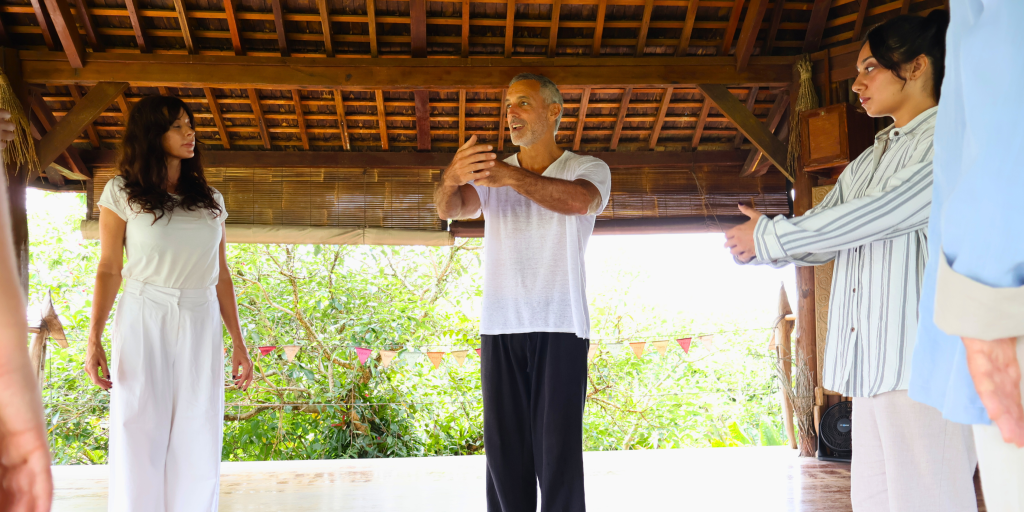
One of the reasons Shibashi is often recommended to beginners is its simplicity.
Many traditional movement systems require students to memorize long sequences or develop specific physical abilities before they can practice comfortably. Shibashi takes a different approach.
The movements are:
- slow and continuous
- easy to learn step by step
- adaptable to different levels of mobility
This means that practitioners can begin experiencing the benefits of the practice relatively quickly.
Because the movements are gentle, the body has time to relax during the exercise. The breath gradually deepens, the shoulders soften, and the rhythm of movement becomes more natural.
Rather than forcing the body to perform, Shibashi encourages practitioners to listen to the body’s natural rhythm.
For people living in fast-paced environments, this slower rhythm can feel surprisingly restorative.
Movement, Breath, and Awareness
At the heart of Shibashi practice lies the relationship between movement, breathing, and awareness.
Each movement in the sequence is performed slowly and intentionally. As the arms rise, the breath expands naturally. As the arms lower, the breath softens and releases.
This coordination creates a gentle cycle between inhalation and exhalation.
Over time, the body begins to settle into a consistent rhythm. The breath becomes smoother, and movements require less effort. Practitioners often notice that tension in the shoulders, neck, and back gradually begins to release.
Although the movements appear simple, the internal experience can become surprisingly rich.
Instead of focusing on speed or performance, practitioners are encouraged to observe how the body feels during movement. This attention transforms the exercise into a form of moving meditation.
Learning Shibashi Through Guided Practice
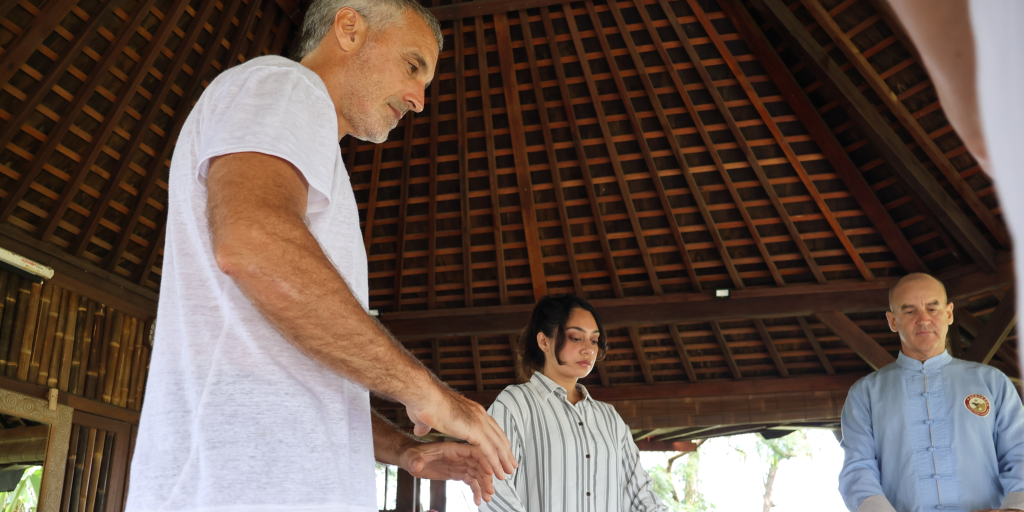
While Shibashi can eventually be practiced independently, learning the sequence with guidance can make a significant difference.
A skilled teacher helps students understand not only the outer shape of the movements but also the internal qualities that give the practice its depth.
Subtle details—such as posture alignment, breathing rhythm, and relaxation—often determine whether the practice feels mechanical or truly restorative.
In Bali, one of the teachers sharing this tradition is Jordi Jules, who has spent years teaching Qigong and Tai Chi to students from around the world.
His background and teaching approach are explored further in Jordi Jules: Qigong Teacher Profile.
Through guided instruction, students can learn how to perform the movements correctly while developing a deeper understanding of the practice itself.
Practicing in a Retreat Environment
Although Shibashi can be practiced anywhere, learning the sequence within a retreat environment often allows participants to experience its benefits more fully.
Retreat settings create a space where practitioners can step away from daily routines and focus entirely on practice.
Without the usual distractions of work, screens, and constant activity, the body and mind begin to slow down. This slower pace allows students to absorb the movements more deeply.
Morning sessions often begin with gentle Qigong exercises that awaken the body gradually. Over the course of several days, students refine the sequence while learning how breathing and awareness support each movement.
Between sessions there is time for rest, reflection, and integration.
For many participants, this rhythm creates a sense of balance that can be difficult to access in everyday life.
The Value of Simple Practices
One of the most remarkable aspects of Shibashi is that its simplicity allows it to remain effective over many years of practice.
Unlike systems that depend on constant novelty or intensity, Shibashi relies on a small number of movements performed with increasing awareness.
As practitioners become more familiar with the sequence, the focus shifts from memorizing movements to refining subtle internal qualities.
Breathing becomes deeper. Movements become smoother. Awareness becomes more stable.
What begins as a beginner-friendly practice gradually becomes a lifelong tool for maintaining balance and well-being.
Beginning the Practice
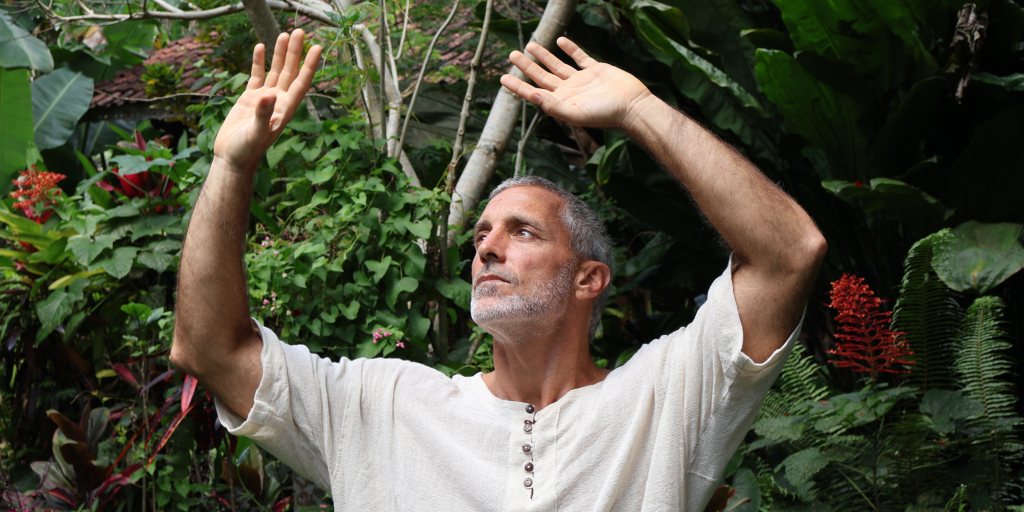
For those curious about exploring Shibashi more deeply, guided training can provide a valuable starting point.
In May, Bali Flow will host a Shibashi Tai Chi Qigong Training from 4–9 May 2026 in Ubud, offering participants the opportunity to learn the sequence in a supportive environment.
The training focuses on understanding the 18 movements, refining breathing coordination, and developing a consistent practice rhythm.
More details about the program can be found here: Shibashi Tai Chi Qigong Training — 4–9 May 2026
For beginners, this type of immersive training can make the learning process much clearer and more enjoyable.
A Gentle Beginning
Many traditional practices begin with complexity, but Shibashi begins with simplicity.
Through 18 gentle movements, practitioners learn to coordinate breath, movement, and awareness. What starts as a simple sequence gradually becomes a deeper exploration of balance and internal rhythm.
For beginners, it offers a welcoming doorway into the world of Tai Chi and Qigong.
And sometimes, the most powerful practices are the ones that begin quietly.