
What Is Shibashi Qigong? A Simple Way to Start a Daily Practice
Starting With Something Simple
Most people don’t come to Qigong because they want to master something complex. They come because something feels off.
Too much tension in the body.
Breathing that feels shallow or rushed.
A mind that doesn’t quite settle, even when everything looks “fine” on the outside.
And yet, starting something new often feels like adding more to an already full plate.
This is where practices like Shibashi Qigong feel different. Not because they promise a transformation, but because they begin with something simple: a sequence of movements that you can return to, again and again, without needing to force anything.
What Is Shibashi Qigong?
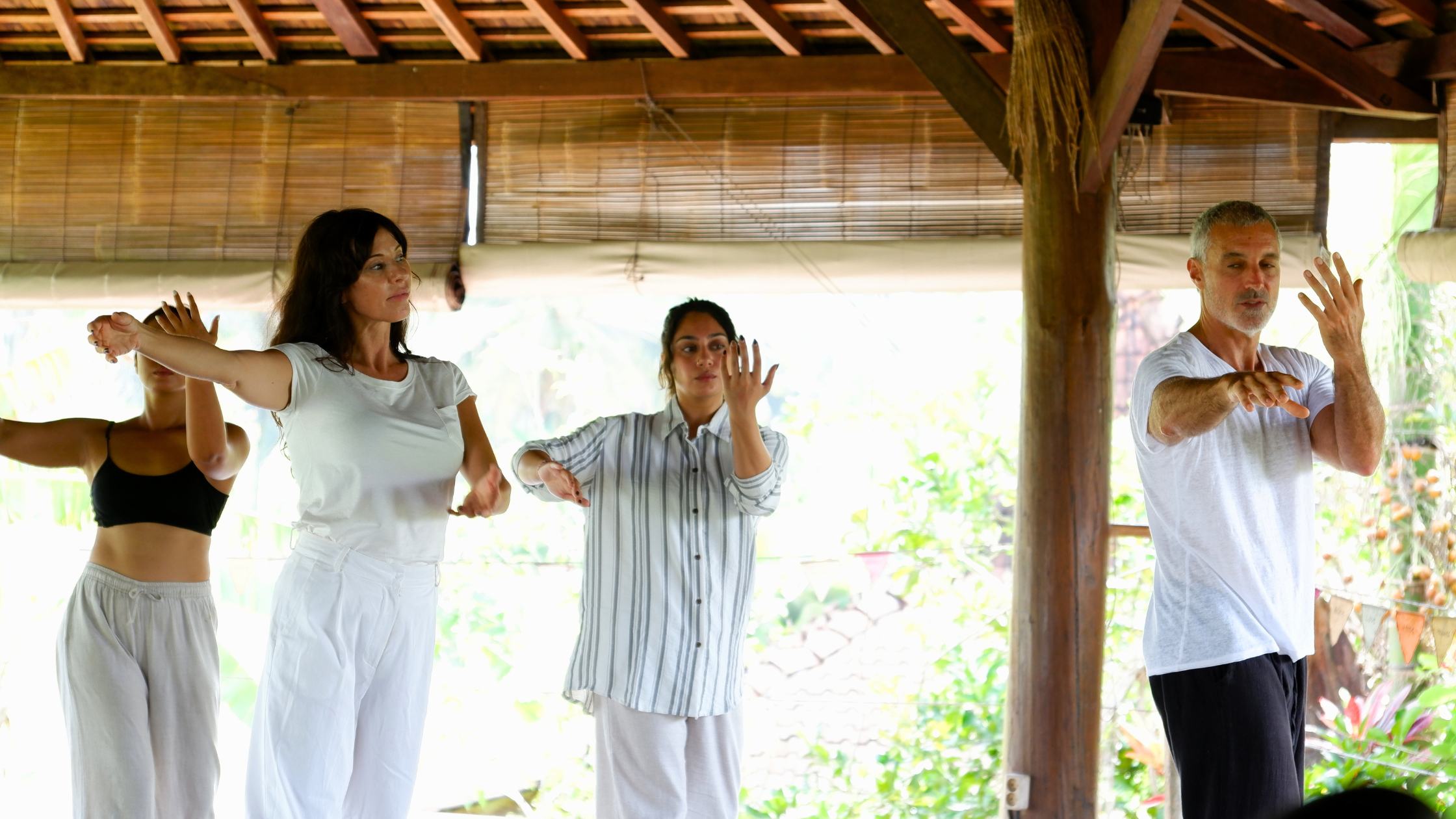
Shí Bā Shì (十八式), often referred to as Shibashi Qigong, is a sequence of 18 movements inspired by Tai Chi principles.
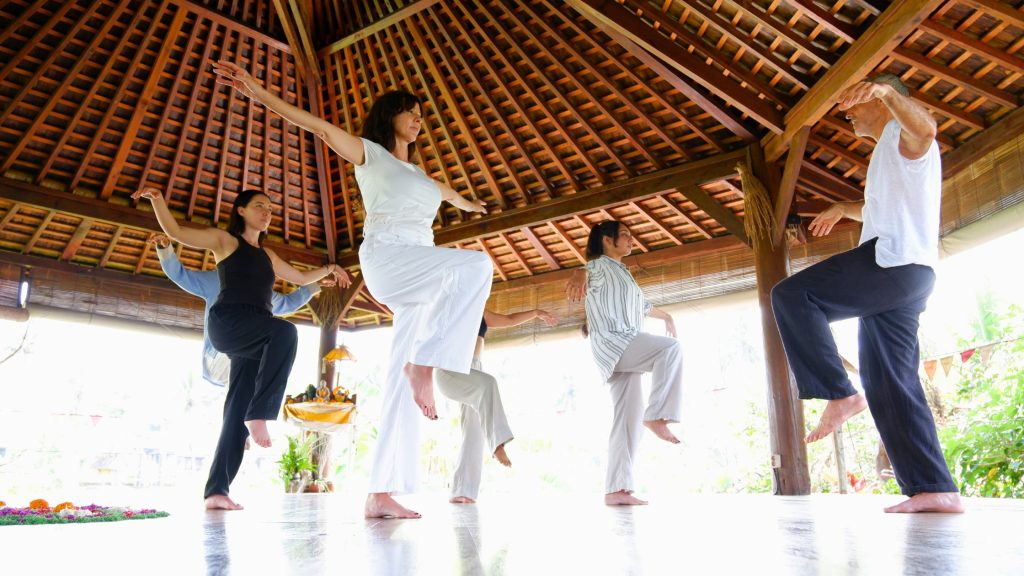
Each movement is slow, continuous, and guided by the breath. There’s no rush to complete it. No pressure to get it perfect.
Instead, the practice builds through repetition: allowing the body to gradually understand the movement, rather than trying to control it from the beginning.
It sits somewhere between Tai Chi and traditional Qigong:
- like Tai Chi, it follows a flowing sequence
- like Qigong, it focuses on breath, energy, and internal awareness
What makes Shibashi approachable is its structure.
Eighteen movements, Repeated regularly. Simple enough to learn, but deep enough to stay with.
Why This Practice Feels Different
Most forms of movement today are built around output.
More intensity, more effort, more visible results. Shibashi works in a different direction.
The pace is slower.
The focus is internal.
And the “result” is not something you measure immediately.
Instead of pushing the body, the practice asks you to notice it.
How your weight shifts, how your breath moves, where tension is held, often without awareness.
At first, this can feel unfamiliar. But over time, the repetition creates something steady: a rhythm that the body begins to recognize and respond to.
What Happens When You Practise Consistently
The changes that come from Qigong are not loud, but they are noticeable.
They tend to show up gradually, through small shifts that begin to accumulate.
The Body Softens
With slower movement and less force, the body starts to release tension that has been held for a long time.
Not all at once, but progressively.
Movements feel less rigid.
Posture begins to adjust naturally. There is more ease in how the body carries itself.
The Breath Becomes Steady
Breathing is not something you need to control in this practice. It changes on its own.
As the movements settle, the breath follows: becoming deeper, slower, and more even.
This has a direct effect on the nervous system, helping the body move out of a constant state of alertness.
The Mind Becomes Quieter
Not empty, not silent, but less reactive.
Instead of jumping from one thought to another, the mind begins to follow the pace of the body and breath.
Attention becomes more anchored.
And that alone can change how you move through your day.
Why Shibashi Is a Strong Starting Point
There are many forms of Qigong, some more complex than others.
Shibashi stands out because of its simplicity.
You don’t need prior experience.
You don’t need flexibility.
You don’t need to understand everything at once.
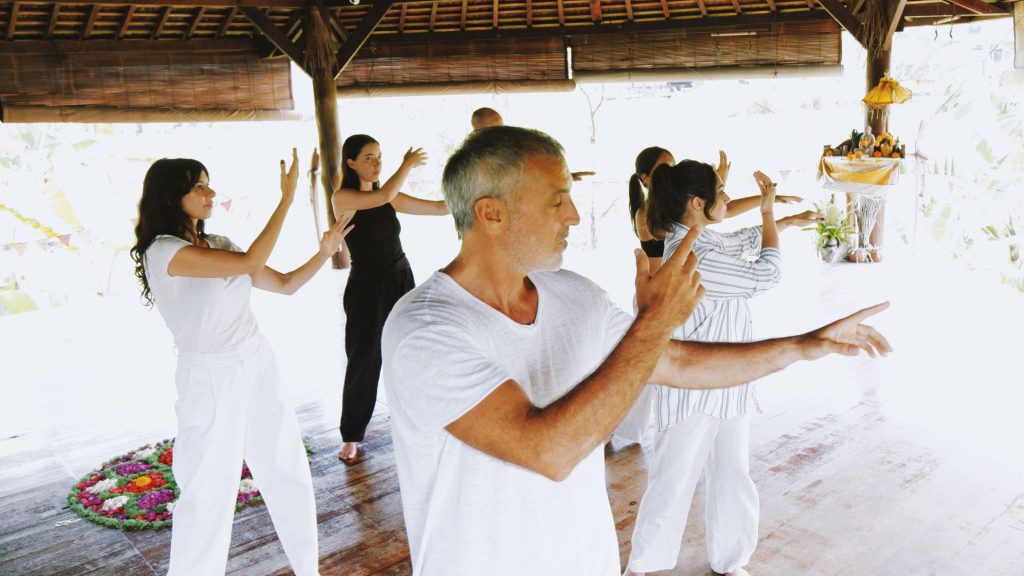
The structure is clear.
The movements are repeatable.
And because of that, it becomes easier to build consistency, which is where the real value of the practice comes from.
Learning Qigong Through Guided Practice
While the movements may look simple, how you learn them matters.
Small details: posture, alignment, breathing, can change how the practice feels in the body.
Without guidance, it’s easy to move through the sequence mechanically, without fully understanding what’s happening.
With guidance, the experience becomes different.
You begin to notice more.
You start to refine how you move, rather than just repeating it.
And over time, that awareness becomes part of the practice itself.
A Structured Way to Begin
If you’re looking for a way to start Qigong in a more grounded and consistent way, guided practice can make a difference.
Our Shibashi Tai Chi Qigong Training is designed around this exact principle.
Six mornings dedicated to the 18-form sequence: not to rush through it, but to build familiarity through repetition.
Each session returns to the same movements, allowing the body to gradually understand and integrate the practice. It’s not about how much you learn in a day, but how consistently you stay with it.
Who This Is For
This kind of practice tends to resonate with people who are looking for something sustainable.
Not intense, not overwhelming. Just something they can return to regularly. It may be a good fit if you:
- feel physically tense without knowing exactly why
- find it difficult to slow down or switch off
- want a form of movement that supports both body and mind
- are looking for something simple enough to continue on your own
What You Actually Take With You
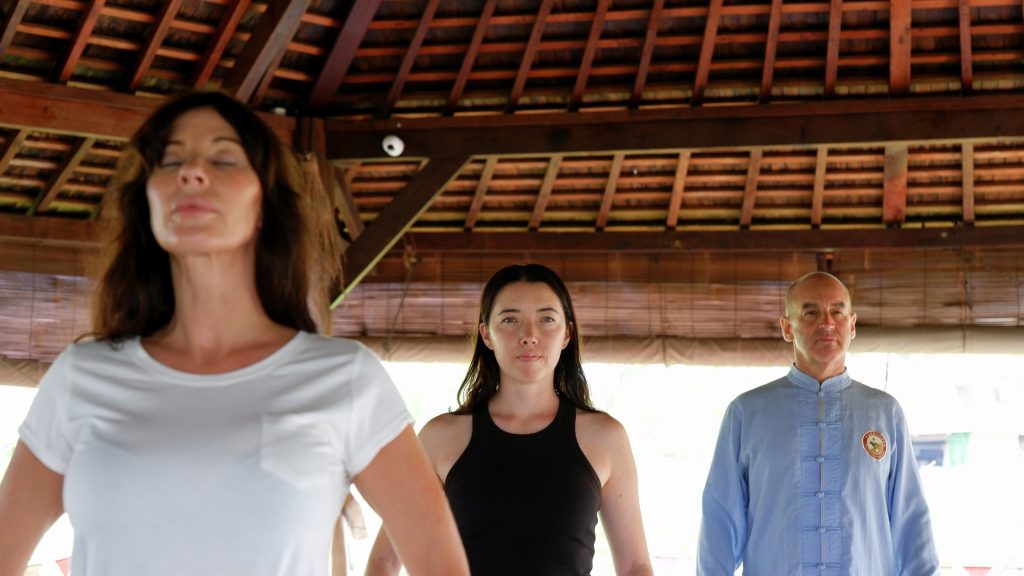
At the end of it, what stays is not just the sequence. It’s the understanding of how to practise.
How to move with less force.
How to breathe with more awareness.
How to recognize when the body needs to slow down.
These are things that don’t disappear once the training ends. They become something you can return to: quietly, consistently, in your own time.
A Simple Way to Start
Starting something new doesn’t always require a big decision. Sometimes, it begins with something small and repeatable.
A short sequence.
A few minutes of movement.
A different way of breathing.
And from there, it builds.
If you’d like to experience this in a guided setting, you can explore the full training here.