
What People Usually Notice After Practicing Qigong Consistently
Qigong is often introduced as a gentle movement practice connected to breathing and body awareness. Because the movements appear slow and simple, many people underestimate how much attention and consistency the practice actually requires.
Unlike exercise systems built around intensity or exhaustion, Qigong focuses on how movement, posture, breathing, and awareness work together over time. The practice is usually approached through repetition, slower pacing, and sustained attention to the body rather than speed or physical output.
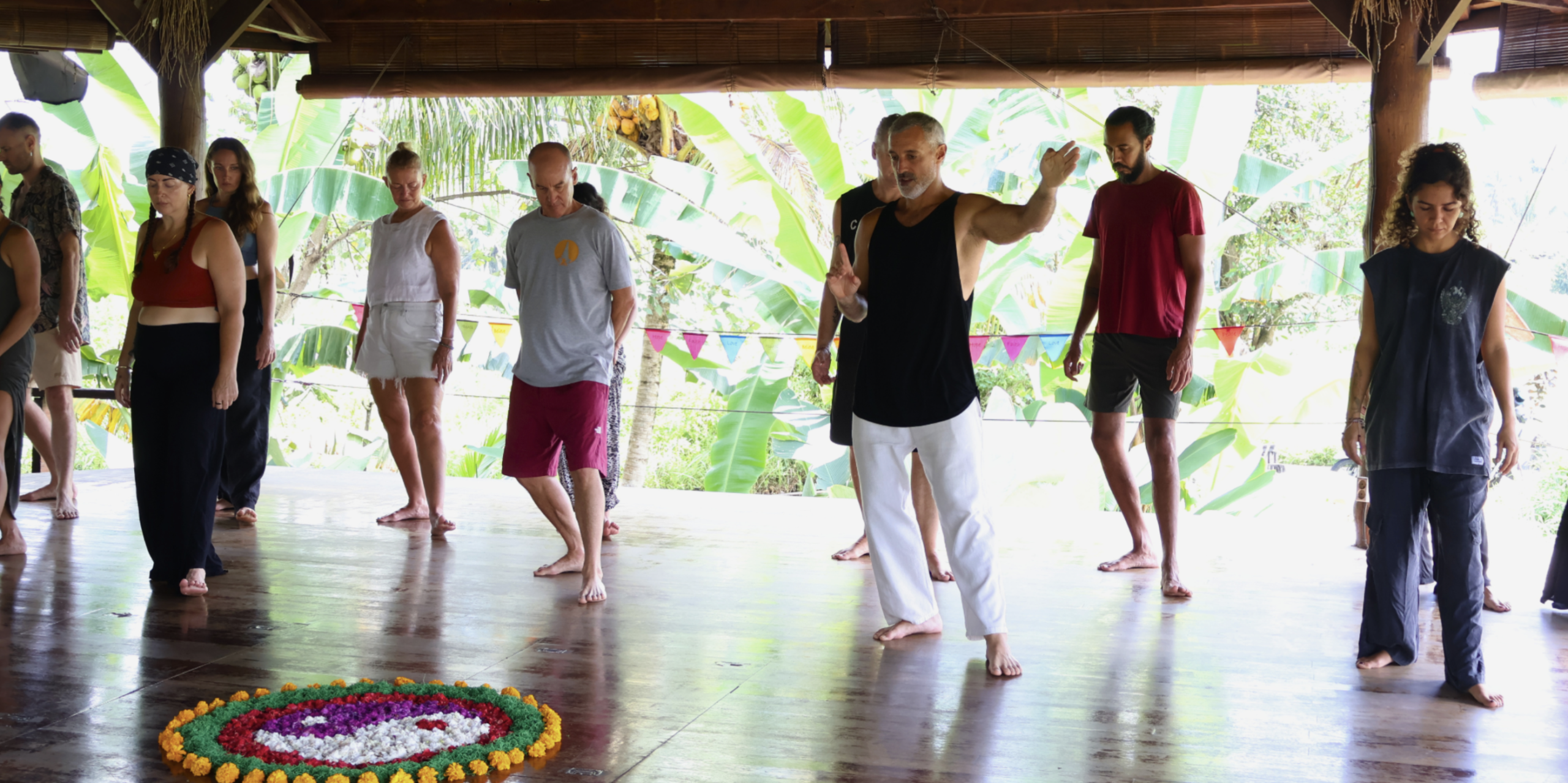
At Bali Flow Retreats, Qigong is practiced as part of a broader approach to movement awareness and internal development. Participants are guided through structured sessions that combine coordinated movement, standing practice, breath awareness, and focused attention in a retreat environment designed for slower and more consistent practice.
Qigong Changes the Way People Pay Attention to Movement
One of the first things many participants notice during Qigong practice is how quickly the mind wants to rush through movement.
Because the pace is slower, participants often become more aware of habits they normally ignore. Tension in the shoulders, unstable posture, shallow breathing, restless attention, and uneven movement patterns become easier to recognize when the body is moving more deliberately. At first, this can feel unfamiliar.
Many people are used to movement practices where the goal is speed, repetition count, or physical exhaustion. Qigong shifts the attention toward awareness, coordination, and consistency instead.
Participants are encouraged to observe how breathing changes during movement, how posture affects stability, and how unnecessary tension appears throughout the body during practice.
Over time, this process often creates a stronger sense of connection between movement and awareness.
The Practice Develops Through Consistency
Qigong is not designed around dramatic short-term results. The practice is usually experienced gradually through repetition and regular training.
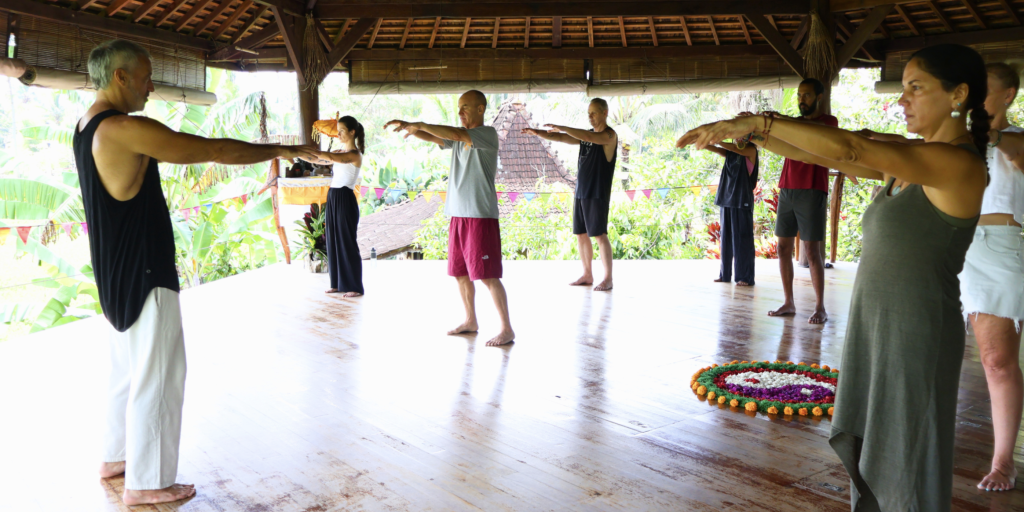
During retreats and intensives, participants spend time repeating coordinated movement sequences while refining posture, breathing patterns, and body awareness throughout the sessions.
Rather than constantly introducing new techniques, the training allows participants to spend more time understanding how the body responds to slower and more attentive movement.
Many practitioners begin noticing gradual improvements in:
- Breathing awareness
- Posture during movement
- Coordination
- Balance and stability
- Physical relaxation
- Movement control
- Awareness of tension patterns
These changes are often subtle in the beginning, but they tend to become more noticeable with consistent practice.
Qigong Is Not Passive Movement
Because the movements are gentle, some people assume Qigong is passive or inactive. In reality, maintaining slow and coordinated movement with attention requires continuous engagement.
Participants are often working with posture, breath timing, controlled transitions, alignment, and mental focus throughout the session.
Even standing still during certain exercises can become physically and mentally demanding when practiced with sustained attention.
For many people, this becomes one of the most surprising parts of Qigong training. The practice may look calm externally, but internally it requires concentration, awareness, and patience.
Over time, participants often begin understanding that the slower pace is intentional. It creates space to observe movement habits that are usually hidden during faster activity.
Breathing Becomes Part of the Practice
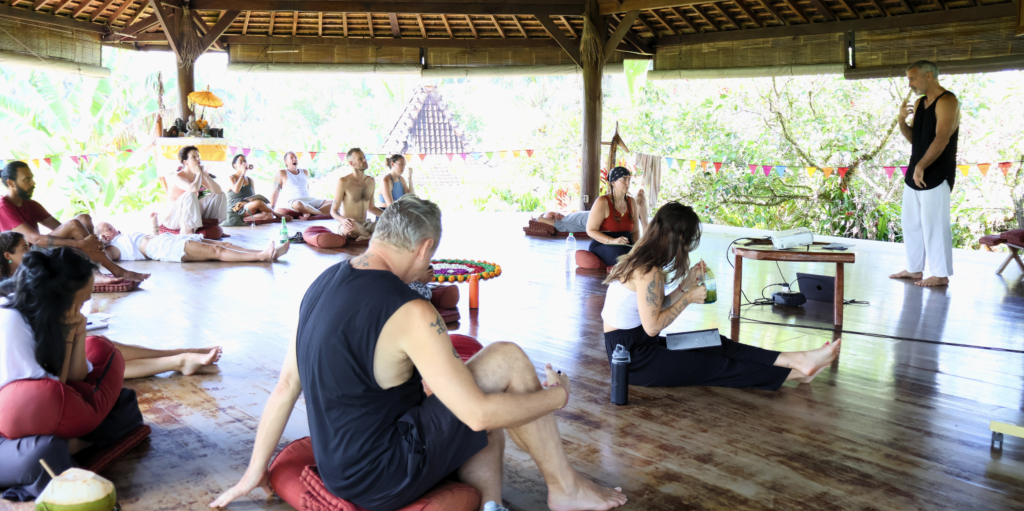
In Qigong, breathing is not treated as a separate exercise disconnected from movement. Instead, breath awareness is integrated into the overall training process.
Participants gradually learn how breathing responds to posture, tension, stepping, and movement transitions throughout the practice.
Rather than forcing deeper breathing patterns, the training encourages steadier and more natural coordination between movement and breath.
Many practitioners find that this creates a calmer and more grounded feeling during practice sessions, especially when combined with slower pacing and repetitive movement sequences.
For some participants, this becomes one of the most valuable parts of Qigong because it changes how they relate to movement and physical awareness outside the training environment as well.
Practicing Qigong Inside a Retreat Environment
Practicing Qigong during a retreat creates a different experience compared to attending occasional classes.
At Bali Flow Retreats, sessions take place inside open-air wooden shalas surrounded by rice fields and tropical greenery in Ubud. The retreat structure allows participants to spend several days practicing consistently while stepping away from the pace and distractions of daily routines.
This consistency often helps participants settle into the practice more naturally.
Instead of rushing through movement, participants have more time to repeat sequences, receive guidance, and gradually become familiar with the principles behind the training.
The retreat environment also creates opportunities for rest, reflection, and shared practice within a quieter setting.
What Participants Often Take Away From Qigong Training
Every participant experiences Qigong differently depending on their background, physical condition, and consistency of practice.
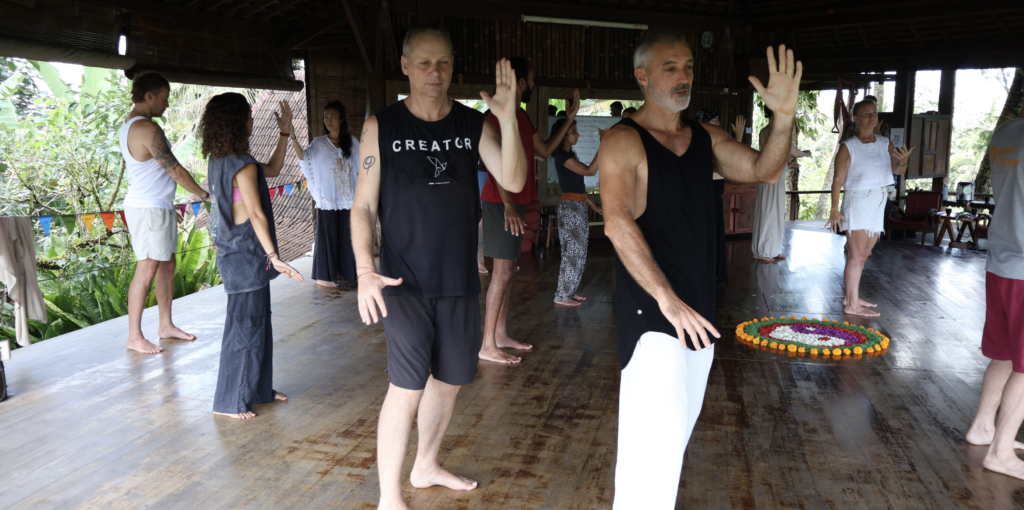
However, many people leave the retreat with a stronger awareness of breathing, posture, balance, and movement habits they previously overlooked. Others become more aware of how tension affects the body throughout daily activities.
For some participants, Qigong becomes part of a longer-term movement practice. For others, the retreat simply becomes an opportunity to reconnect with slower and more attentive movement in a structured environment.
What often stays with participants is not only the sequence itself, but the awareness developed through practicing it consistently.
Exploring Qigong Retreats and Trainings in Ubud
Qigong is much more than gentle movement or relaxation-focused exercise. The practice develops awareness, coordination, breathing, posture, and movement quality through repetition and attentive practice over time.
For people interested in experiencing Qigong more deeply, retreat training offers an opportunity to practice consistently in a quieter and more immersive environment surrounded by nature in Ubud. To explore upcoming Tai Chi, Qigong, and Shaolin programs check this page.