
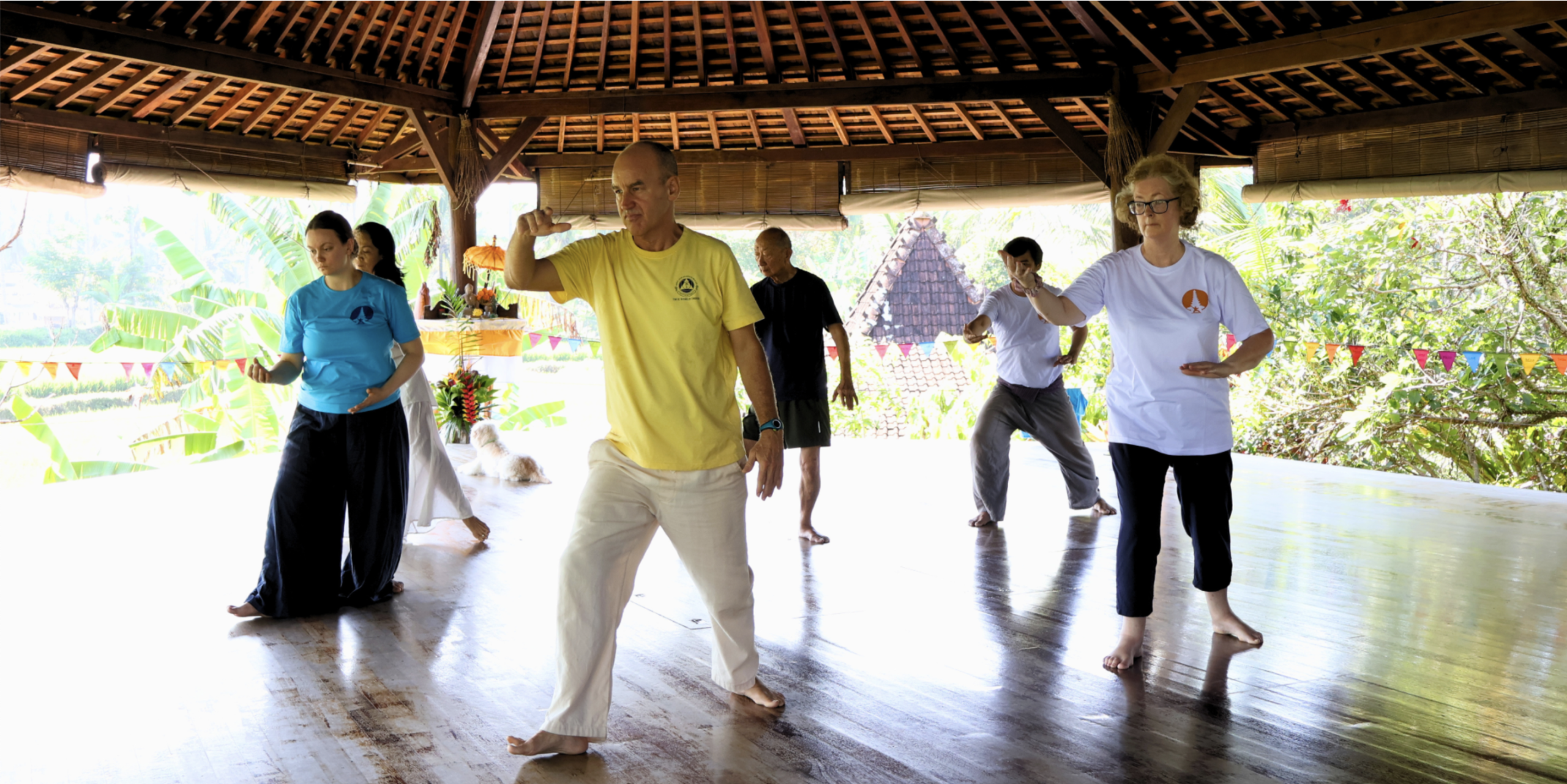
What People Often Misunderstand About Tai Chi Training
Tai Chi is often viewed as a slow movement practice meant only for relaxation or gentle exercise. Because of the calm appearance of the movements, many people assume the practice itself is simple. In reality, Tai Chi requires a high level of awareness, coordination, balance, and control that often becomes more noticeable the longer someone practices.
Behind the slower pace, Tai Chi trains posture, movement quality, breath coordination, stability, responsiveness, and the relationship between physical movement and attention. For many practitioners, the challenge is not about intensity or speed, but about learning how to move with consistency and precision without unnecessary tension.
At Bali Flow Retreats, Tai Chi is approached as a structured practice developed through repetition, observation, and direct experience. Rather than focusing on performance, the training emphasizes foundations that gradually shape the way participants move and carry themselves over time.
Tai Chi Requires More Attention Than Many People Expect
One of the most common surprises beginners experience during Tai Chi training is how much concentration the practice actually requires.
Moving slowly removes momentum and exposes habits that usually go unnoticed during faster movement. Small imbalances, unstable posture, uneven stepping, stiffness, and unnecessary tension become easier to feel when the body is asked to move with more control and awareness.
At first, many participants think they are simply following movements. After spending more time with the practice, they begin noticing that Tai Chi involves constant adjustment and observation throughout the body.
The practice asks participants to pay attention to how weight shifts between the legs, how posture changes during transitions, how breathing responds to movement, and how tension affects coordination and balance.
Because of this, Tai Chi often becomes much more mentally engaging than people initially expect.
The Practice Develops Through Repetition
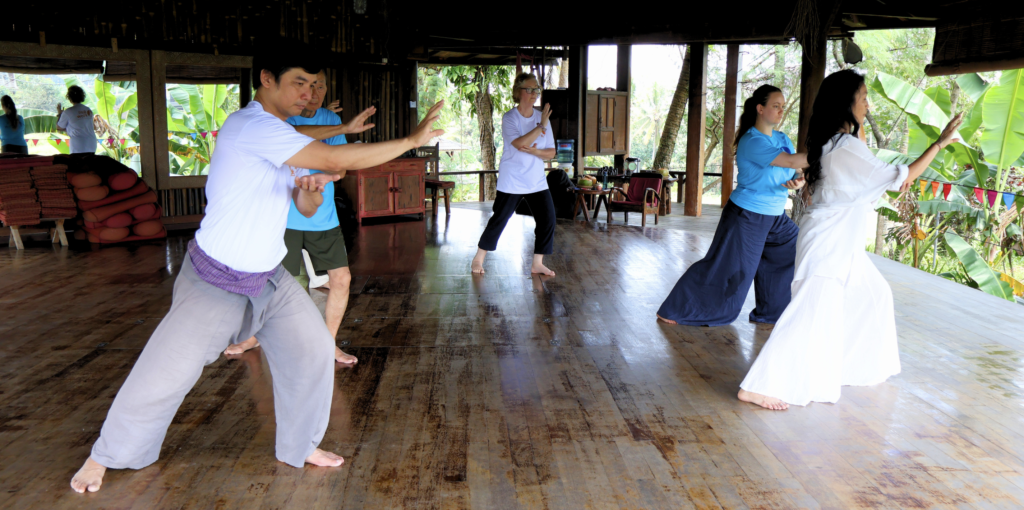
Like many traditional movement systems, Tai Chi is not built around constantly learning new sequences every day. Progress usually comes through repetition and gradual refinement.
During retreat training, participants spend time revisiting foundational movements repeatedly while receiving corrections and guidance throughout the process. This allows the body to slowly develop familiarity with alignment, stepping patterns, coordination, and movement quality.
Over time, practitioners often begin noticing improvements in:
- Balance and stability
- Coordination between upper and lower body
- Awareness of posture
- Controlled stepping
- Movement efficiency
- Breathing patterns during movement
These changes are usually subtle at first, but consistent practice often makes them more noticeable over time.
Tai Chi Is Both Physical and Internal
Although Tai Chi is commonly associated with calmness, the practice itself requires continuous physical and mental engagement.
Participants are not only learning movements. They are also learning how to maintain structure, stay aware during transitions, coordinate breathing with movement, and respond to shifts in balance and positioning.
This combination is part of what makes Tai Chi different from many modern exercise systems that focus primarily on speed, repetition count, or physical exhaustion.
In Tai Chi, slower movement often increases the amount of awareness required. The practice encourages participants to notice how they move rather than simply completing movement mechanically.
For many people, this creates a very different relationship with physical training.
Partner Practice Changes the Learning Experience
Another aspect that surprises many beginners is the role of partner exercises within Tai Chi training.
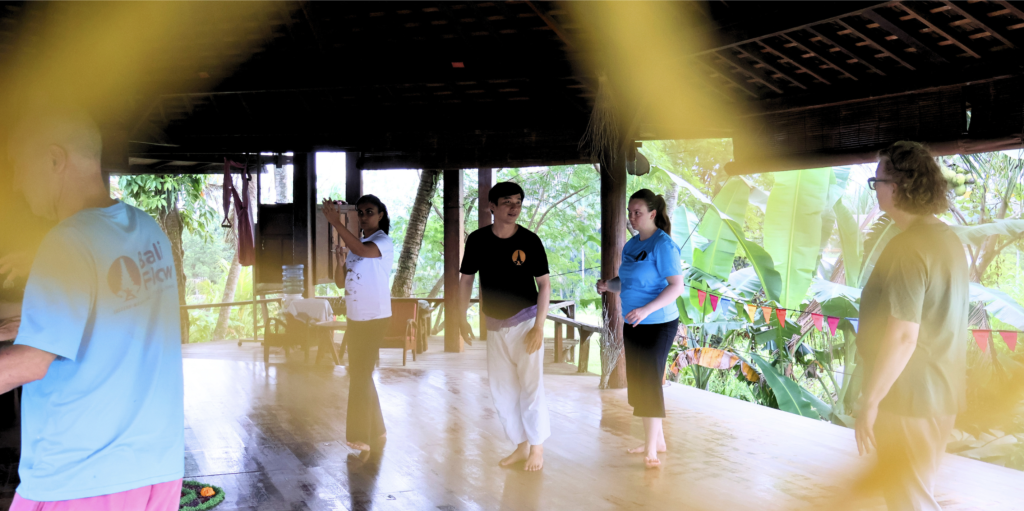
Partner work helps participants directly experience concepts such as timing, balance, responsiveness, structure, and pressure. Rather than practicing movement only in isolation, participants begin learning how their posture and coordination affect interaction with another person.
These exercises are not focused on aggression or overpowering someone else. Instead, they help practitioners understand how movement quality and body awareness influence stability and responsiveness.
For many participants, this becomes one of the clearest ways to understand the principles behind the practice.
Tai Chi Inside a Retreat Environment
Practicing Tai Chi in a retreat setting creates a different experience compared to attending occasional drop-in classes.
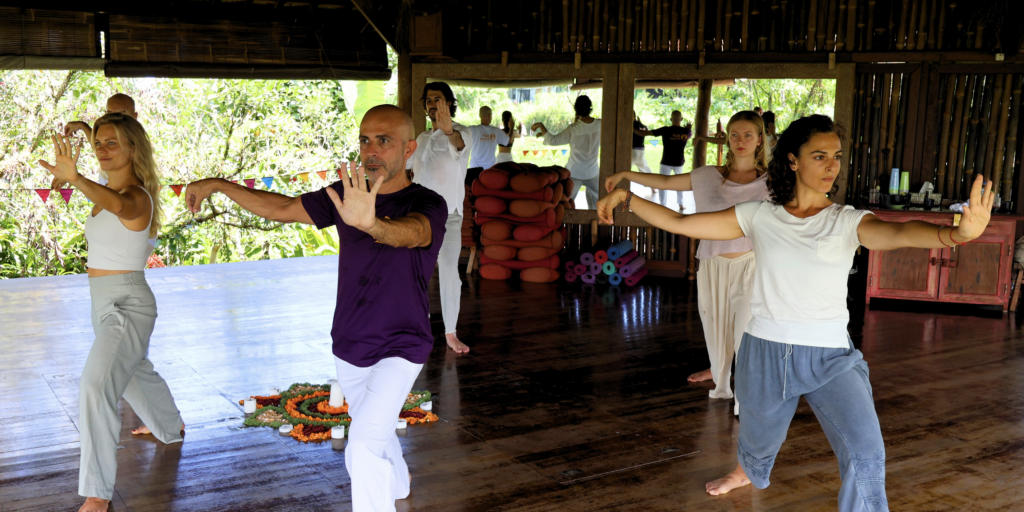
At Bali Flow Retreats, training takes place inside open-air wooden shalas surrounded by rice fields and tropical greenery in Ubud. Participants spend several days immersed in daily practice, allowing more time for repetition, correction, and gradual integration.
The retreat environment also gives participants an opportunity to temporarily step away from busy routines and spend more time focusing on movement, attention, and physical awareness without constant distraction.
Many people find that practicing consistently over several days helps them understand the training more clearly than short isolated sessions.
What Participants Often Take Away From Training
Every participant experiences Tai Chi differently depending on their background, consistency, and reason for joining the retreat.
However, many people leave the training with a stronger awareness of posture, balance, coordination, and movement habits they previously did not notice. Some continue practicing Tai Chi long-term, while others begin integrating parts of the training into their daily routines, mobility work, or personal wellness practices.
What often stays with participants is not only the sequence itself, but the awareness developed through the process of practicing it consistently.
Exploring Tai Chi More Deeply in Ubud
Tai Chi is far more than slow choreography or relaxation-focused movement. The practice develops awareness, coordination, stability, structure, and movement quality through consistent repetition and direct physical experience.
For people interested in exploring Tai Chi in a more immersive environment, retreat training offers the opportunity to practice consistently while learning progressively over several days in Ubud.
Check this page to explore upcoming Tai Chi, Qigong, and Shaolin programs.