
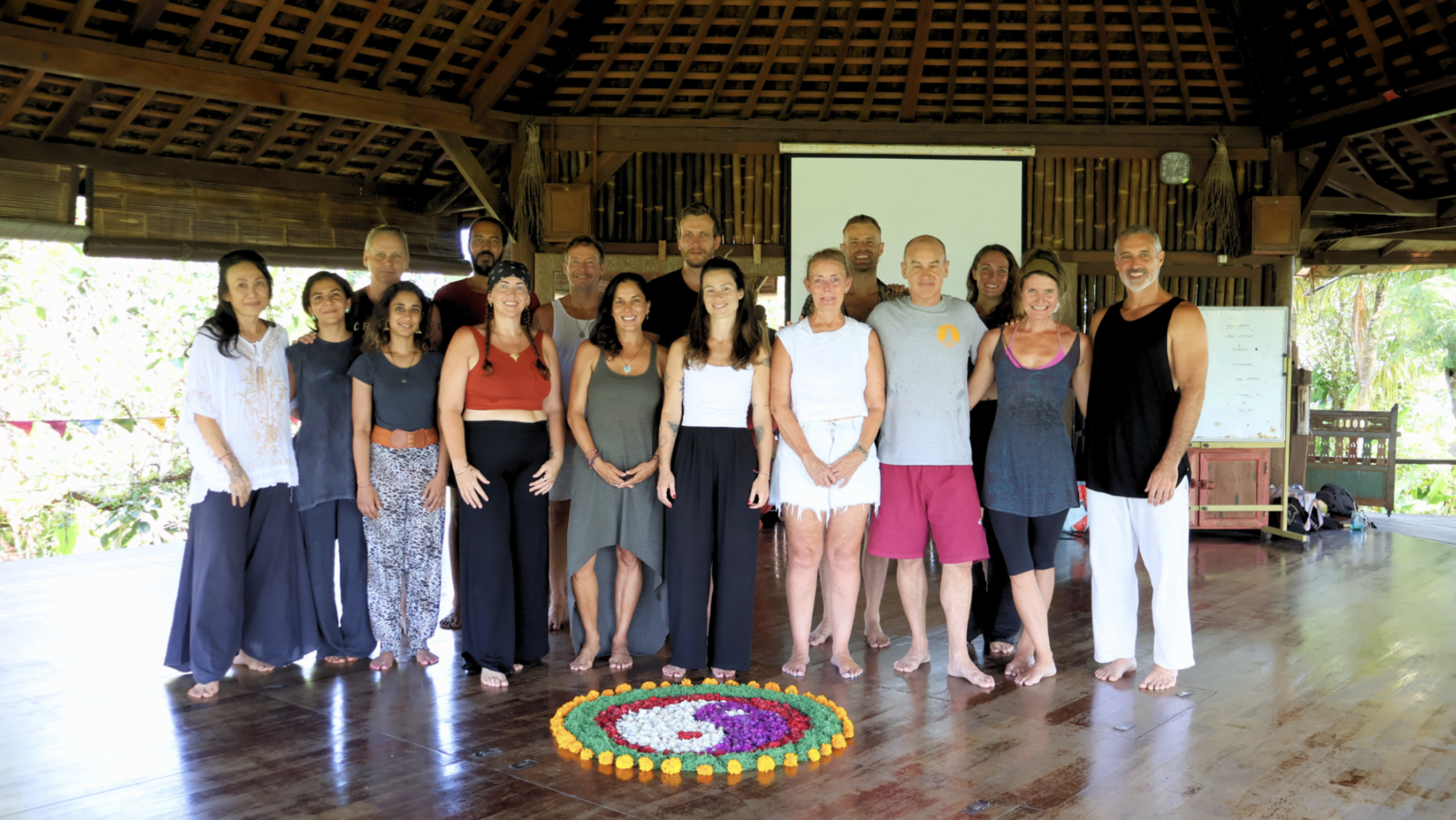
Six Mornings of Shí Bā Shì Practice in Ubud - Recap from Jordi Jules’ May 2026 Qigong Training
From 4–9 May 2026, participants gathered at Dragonfly Village, Ubud for six mornings dedicated to the practice of Shí Bā Shì (十八式), commonly known as Shibashi Tai Chi Qigong. Guided by Jordi Jules, the training brought together people from different countries, backgrounds, and levels of experience for a structured immersion into the 18-form sequence.
Held in Dragonfly Village’s open-air shala overlooking the rice fields, the training unfolded through a steady rhythm each day: movement, breath, repetition, observation, questions, shared meals, and practice. Some participants arrived with years of experience in yoga, Tai Chi, or internal arts. Others stepped into Qigong for the very first time. Over six mornings, the group gradually developed a shared language through the practice itself.
A Structured Six-Morning Training
The training ran daily from 9 AM to 1 PM, with participants arriving earlier in the morning to settle into the space with herbal tea before the sessions began.
Jordi guided the group progressively through the Shí Bā Shì sequence, allowing participants to understand the forms step by step rather than rushing through memorisation. Throughout the training, attention was placed on body structure, breath coordination, rhythm, continuity of movement, and the relationship between focus and relaxation.
The pace of the workshop allowed participants to revisit movements repeatedly over the six days. As the forms became more familiar, participants began to experience a clearer sense of flow, coordination, and internal steadiness.
Questions naturally emerged throughout the process. Discussions around movement principles, breathing patterns, energy cultivation, posture, and daily practice became part of the learning environment. Some participants took notes during the theory sections, while others preferred to absorb the information through observation and repetition.
The atmosphere remained focused while still relaxed and human. There were moments of concentration, moments of laughter, and moments where participants simply stood quietly together between forms.
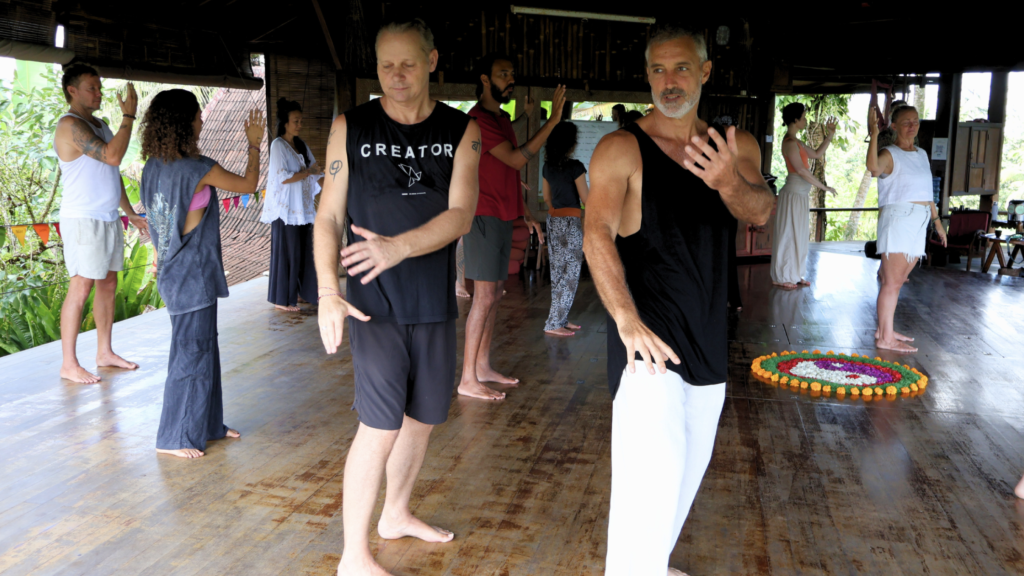
Practicing in the Middle of Rice Fields
The environment at Dragonfly Village became an important part of the overall experience.
The shala itself sits open to the surrounding landscape, allowing fresh air, natural light, birdsong, and the movement of the rice fields to remain present throughout the sessions. Rather than separating the training from the environment, the setting became part of the rhythm of the practice.
Between sessions and breaks, participants shared conversations over herbal tea, rested by the pool, or spent quiet moments overlooking the fields before returning to practice.
The slower pace of the surroundings supported the structure of the training itself. Over several days, participants gradually adapted to a different rhythm: waking earlier, moving more consciously, paying closer attention to breathing, posture, and physical awareness.
Lunch each day was served at Dragonfly Village following the morning sessions. The meals focused on fresh vegetarian food prepared with local ingredients, creating another point of pause and integration after several hours of movement and practice.
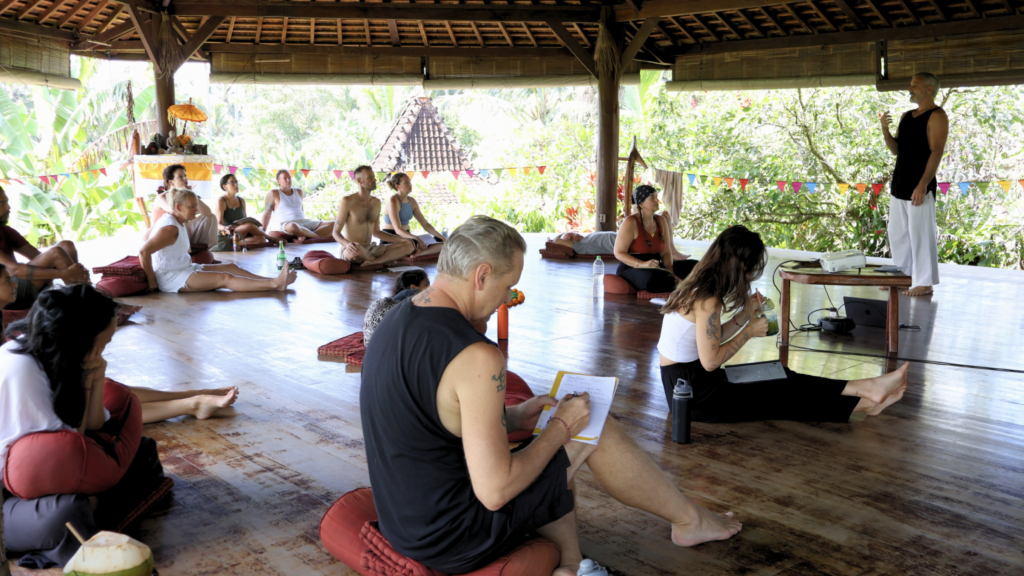
Understanding Shí Bā Shì Beyond Choreography
One of the central aspects of the training was learning to approach the 18 forms as more than a memorised sequence.
Throughout the workshop, Jordi repeatedly returned to the importance of continuity, softness, balance, and coordination between movement and breath. Participants were encouraged to observe how the body responds when movement becomes more efficient, connected, and less fragmented.
As familiarity with the sequence increased over the six days, participants began to notice changes in rhythm, posture, breathing patterns, and overall physical awareness. Some found the repetition meditative. Others experienced improved coordination or a clearer sense of grounding during the practice.
The training also created space for participants to reflect on how consistency shapes internal arts practice over time. Rather than seeking quick results, the workshop emphasised gradual cultivation through repetition and steady attention.
This approach resonated strongly with many participants, especially those looking for sustainable practices that can continue beyond the workshop environment.
A Shared Learning Environment
An important part of the week came from the shared experience of practicing together.
Participants arrived from different parts of the world, carrying different motivations and relationships to movement. Some were exploring Qigong as part of personal health practices. Others were curious about Tai Chi principles, breathwork, or nervous system regulation. Several participants already had backgrounds in yoga, meditation, martial arts, or bodywork.
Over six mornings, these different backgrounds gradually merged into a shared learning environment shaped by practice itself.
Outside the formal sessions, conversations continued naturally over lunch tables, herbal tea breaks, and quiet moments around the venue. Participants exchanged experiences, asked questions, reflected on the forms, and spoke about how the practice related to daily life.
The group dynamic remained supportive throughout the week. Without forcing interaction, the training created space for connection through shared repetition, observation, and time spent together.
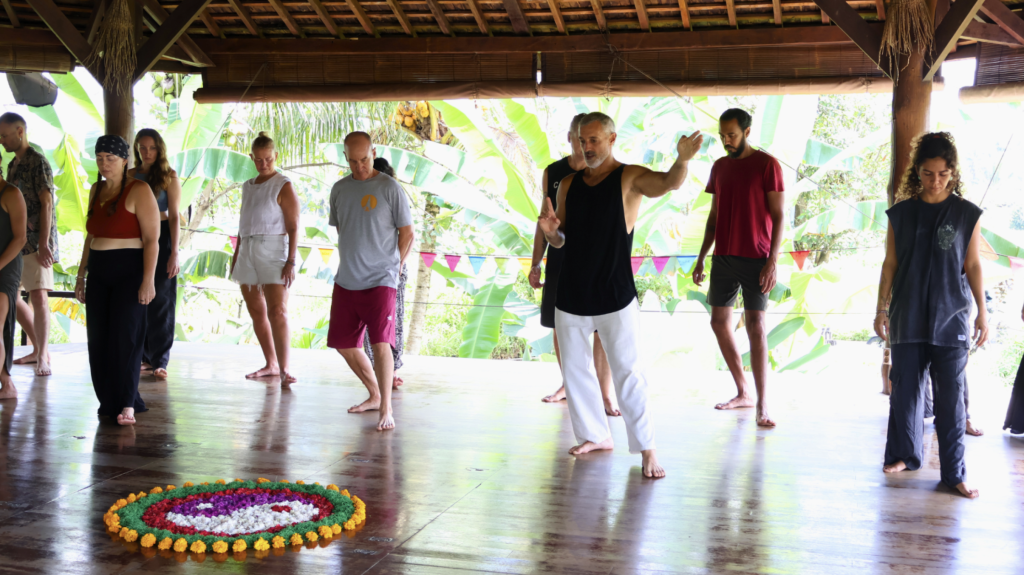
Integration Through Repetition
One of the strongest aspects of the training came through the repetition built into the schedule.
Practicing the forms over six consecutive mornings gave participants enough time to move beyond simply following instructions. Gradually, the sequence started settling more naturally into the body.
Small adjustments in posture, timing, breath, and coordination became easier to recognise. Participants became more aware of where they held unnecessary tension, how they distributed weight through movement, and how attention influenced physical flow.
This process of repetition also created a calmer relationship with learning itself. Instead of rushing toward mastery, the training allowed participants to slow down and develop familiarity with the sequence through consistent practice.
By the final days, many participants moved through the forms with noticeably more confidence and fluidity compared to the beginning of the training.
Closing the Week
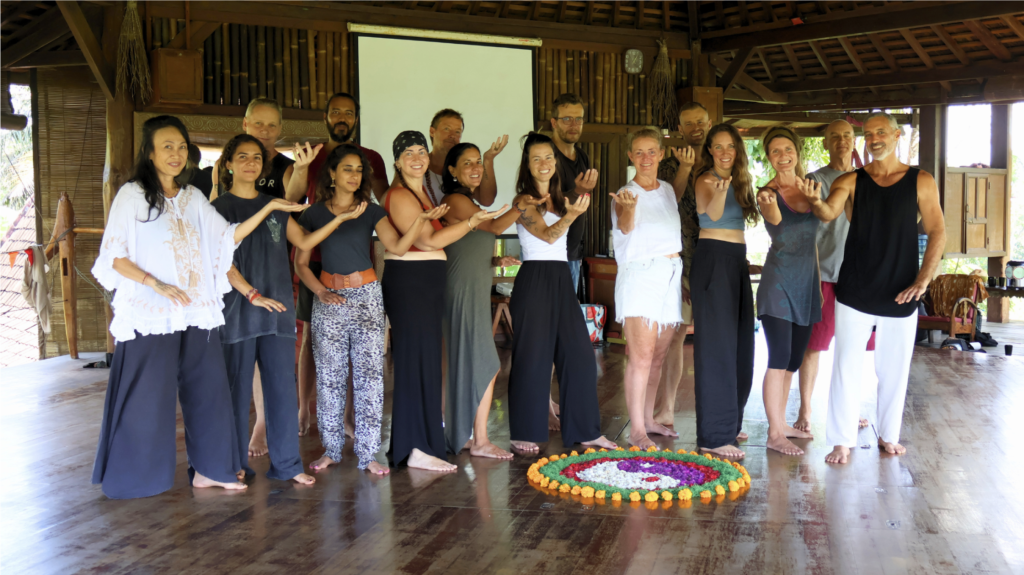
As the training came to a close on 9 May, the atmosphere carried a mixture of satisfaction, reflection, and appreciation.
Over six mornings, participants had shared a structured experience shaped by movement, breath, discussion, meals, and daily practice in the middle of Ubud’s rice fields.
For some, the training became an introduction to Qigong. For others, it deepened existing practices and understanding. Many participants left with a stronger familiarity with the Shí Bā Shì sequence and a clearer foundation for continuing practice independently.
Beyond the forms themselves, the workshop also offered something increasingly valuable in modern life: dedicated time to practice consistently, observe carefully, and participate in a shared environment built around attention, rhythm, and presence.
Bali Flow Retreats extends gratitude to Jordi Jules for guiding the training, to Dragonfly Village for hosting the experience, and to every participant who brought their time, attention, curiosity, and practice into the space throughout the week.