
Shaolin Training in Bali: Highlights from Our Week Intensive in Ubud
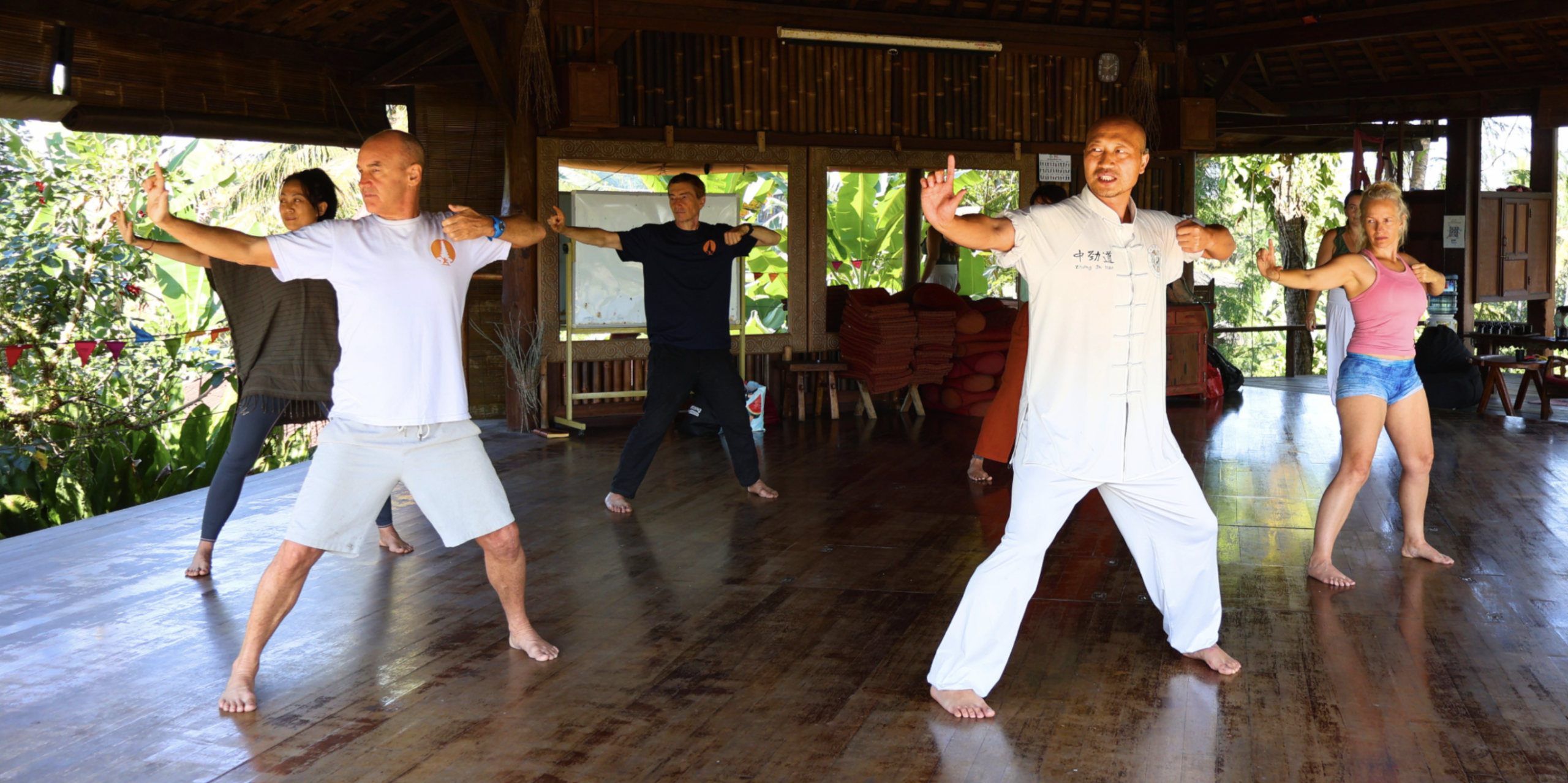
From 8–13 June 2026, a small group gathered in the open-air shala at Dragonfly Village for six days of authentic Shaolin training in Bali — Classic Shaolin Kung Fu, energy (Qi) work, and Chan (Zen) philosophy with renowned Shaolin Master, Shifu Li Shi Feng.
It was intensive in the truest sense: full days, real foundations, and the kind of direct correction that only happens in a small group with a master who has spent his life in the art. Now that the week has drawn to a close, here’s a look back at what unfolded on the mat — and what made this more than just a martial arts class.
What the Shaolin Basics Week Intensive Is About
Shaolin Kung Fu is one of the oldest and most complete martial systems in the world — and it rewards those who start at the beginning. The Shaolin Basics Week Intensive was built for exactly that: a structured, week-long introduction designed to give participants genuine foundations rather than a surface-level taste.
Over six days, the group worked through the building blocks that everything else in Shaolin rests on — stance, structure, alignment, breath, and the cultivation of internal energy. No prior experience was required, and the group spanned a real range of backgrounds and ages, each person meeting the work at their own level. That accessibility is part of the point: Shaolin isn’t reserved for the already-athletic. It’s a practice anyone can begin, provided they’re willing to show up and do the work.
Training With Shifu Li Shi Feng
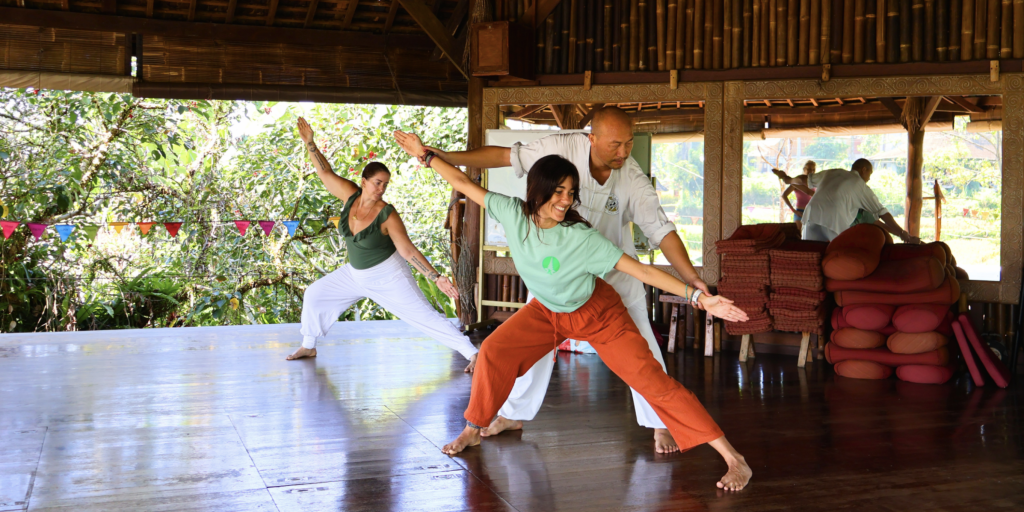
Much of what made the week so rich came down to the teacher. Shifu Li Shi Feng was born in Henan Province, China — the birthplace of Shaolin Kung Fu, Qigong, Tai Chi, and Chinese classical philosophy. He is co-founder of the Li Shifeng Kungfu Academy and the Zhong Jin Dao Training System, a body–mind–energy path rooted in balance, discipline, and internal cultivation.
His teaching integrates traditional Shaolin training with the philosophical foundations of Buddhism, Taoism, and Confucianism. Over more than a decade, he has shared Shaolin, Qigong, Tai Chi, Baguazhang, and classical Chinese philosophy with students from more than 120 countries, both in person and online.
What that experience translates to, in a room, is precision. Shifu combines technical instruction with direct personal correction — watching each practitioner, then adjusting a stance, a wrist, an angle of the spine until the structure is right. In a small group, that attention is the whole difference. Over six days, every participant received the kind of one-on-one guidance that’s almost impossible to find in a larger class or a casual drop-in.
A Day of Shaolin Training in Ubud
The week followed a steady rhythm designed to support both learning and recovery. Mornings opened gently, with Qigong and warm-ups as the rice fields came to life around the shala — a way of waking the body and settling the mind before the harder work began.
From there, the sessions moved into the core of the practice: foundational stances, structural alignment, and the slow, deliberate building of strength and coordination that Shaolin demands. Afternoons shifted toward integration and internal development, giving the body time to absorb the morning’s material. Days closed with space for reflection and Chan philosophy, drawing the threads of physical and internal practice together.
Throughout, the pace was adjusted to the group’s energy. This wasn’t about pushing bodies to breaking point; it was about consistent, intelligent practice — working within your own capacity and building awareness with each repetition.
More Than Physical Training
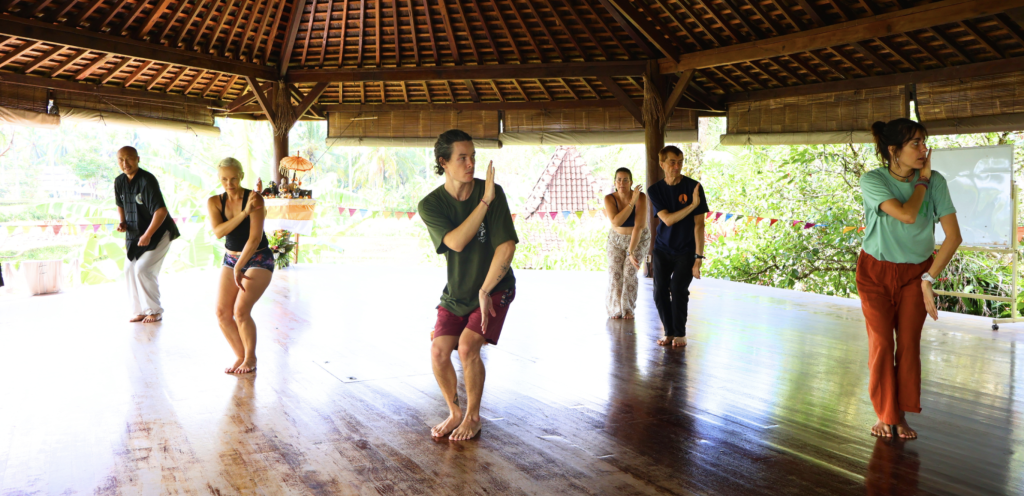
Shaolin has never been only about movement. One of the things that surprised several participants was how much of the week lived in the quieter spaces — the breath work, the stillness, the moments of Chan reflection that gave the physical training its meaning.
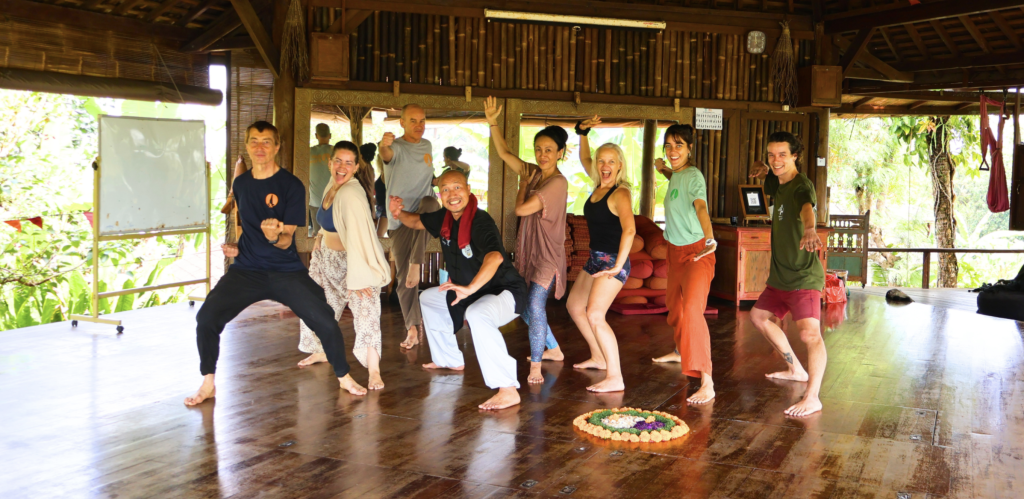
By the final day, the group had moved through the full arc of the practice: opening the body, refining movement, testing structure, and internalising it all through reflection. On the last morning, everyone gathered to share what the week had given them — what had shifted, what had challenged them, and what they were carrying home.
A Group That Trained Together
Six days of shared training builds something between people. By the end of the week, this was less a class and more a small community — people who had sweated, struggled, and laughed through the same challenges. The closing morning had room for both the formal and the playful, and the group marked it together.
Why Dragonfly Village Is Made for This Work
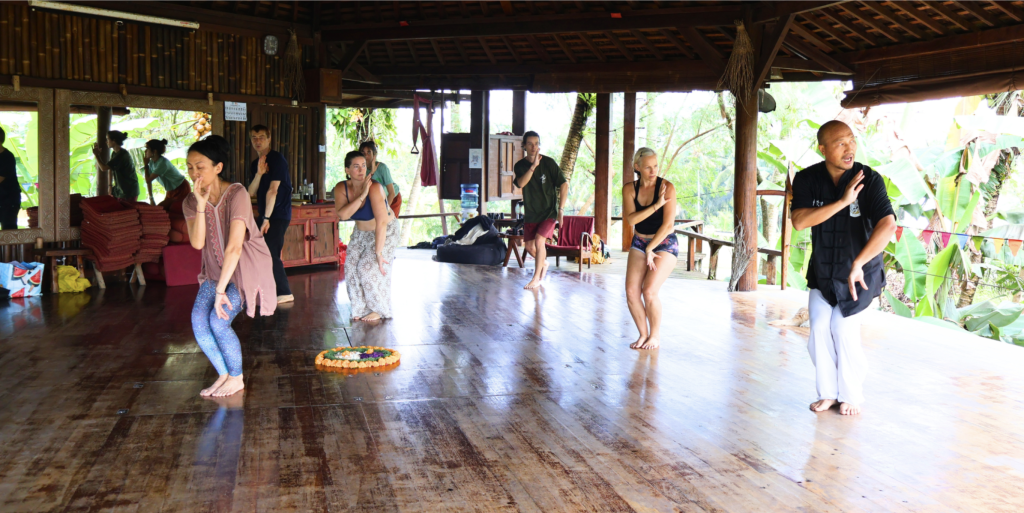
Where you train matters, and Dragonfly Village is built for internal arts. Set among rice fields away from central Ubud’s bustle, it offers the kind of grounded, quiet space this practice calls for. Training takes place in an open-air wooden shala with natural ventilation, overlooking the terraces and surrounding greenery — a calm space that becomes part of the practice itself.
Off the shala, the setting supported recovery as much as the training pushed it: a saltwater swimming pool to cool off in, a herbal steam bath, and fresh, farm-to-table meals made from local organic produce. Between sessions, there was room to rest, swim, and let the days settle in.
What's Next at Bali Flow
If this week’s energy speaks to you, our next program at Dragonfly Village is open for booking now:
Tai Chi: 13 Forms of Harmony · 28 June – 2 July 2026
Develop structure, balance, and internal connection through the 8 Energies (bā mén) and 5 Steps (wǔ bù) — the heart of Tai Chi practice. Open to all levels, with the choice of a Day Program or a Residential Package.
Explore the program here, or message us on WhatsApp at +62 813-3757-9464 to ask about joining.
The path always starts with the basics, and we’d love to have you on the mat for the next one.