
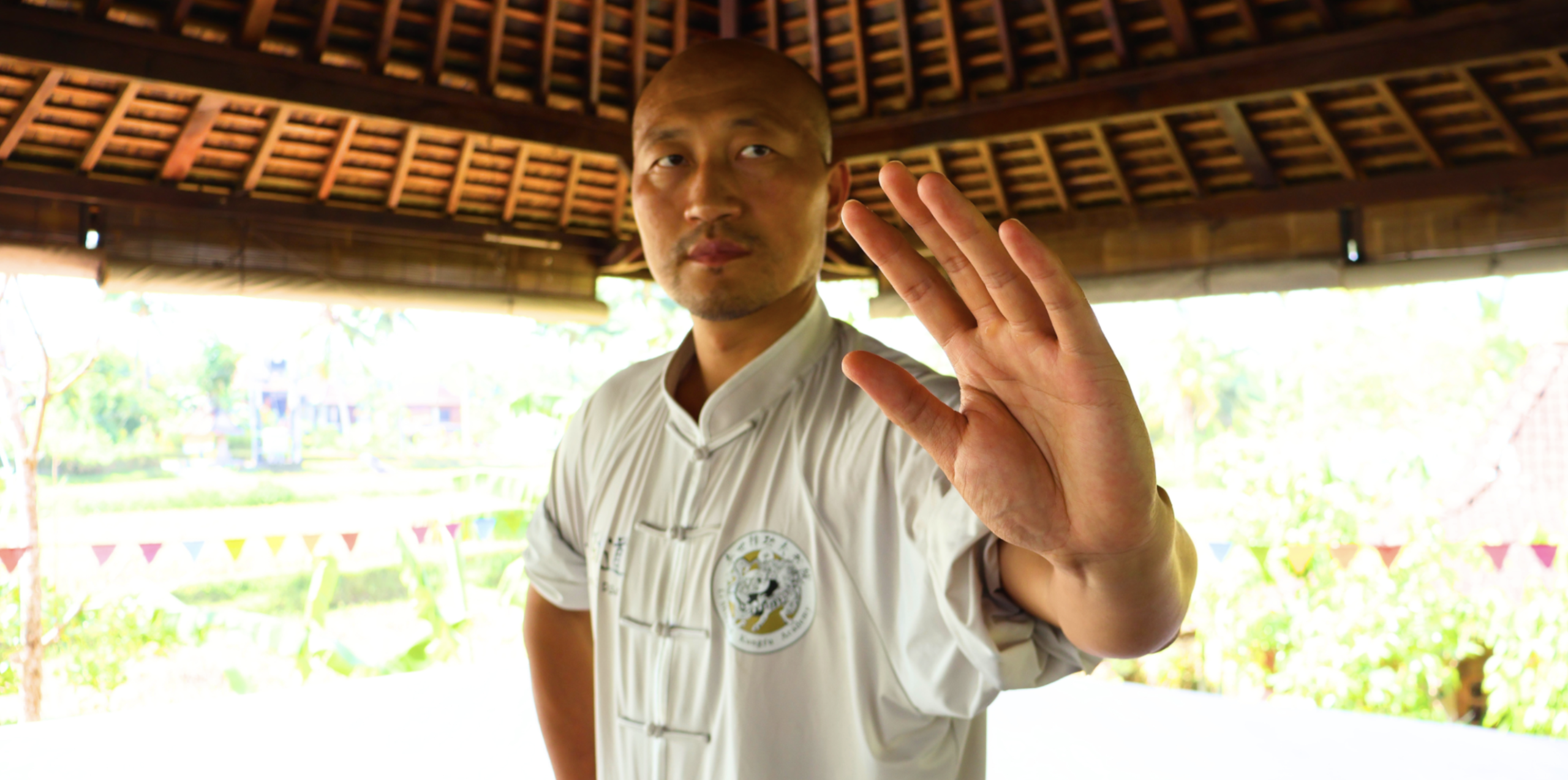
Reasons to Join Tai Chi: 13 Forms of Harmony in Ubud
Many people become interested in Tai Chi because they are looking for a slower and more intentional movement practice. Others are drawn to it after years of high-intensity training, stressful routines, or feeling disconnected from their own body awareness.
What often keeps people practicing, however, is not only the movement itself. It is the experience of learning balance, coordination, posture, responsiveness, and attention through consistent training over time.
At Bali Flow Retreats, the Tai Chi: 13 Forms of Harmony intensive is designed as a structured and immersive training experience led by Master Li Shi Feng in Ubud, Bali. The retreat focuses on the classical Tai Chi system built around the 8 Energies (Ba Men) and 5 Steps (Wu Bu), helping participants explore the foundations of Tai Chi through direct daily practice.
For many participants, the retreat becomes more than simply learning movements. It becomes an opportunity to slow down, train consistently, and experience a different relationship with movement and awareness.
Learning Tai Chi Beyond Memorization
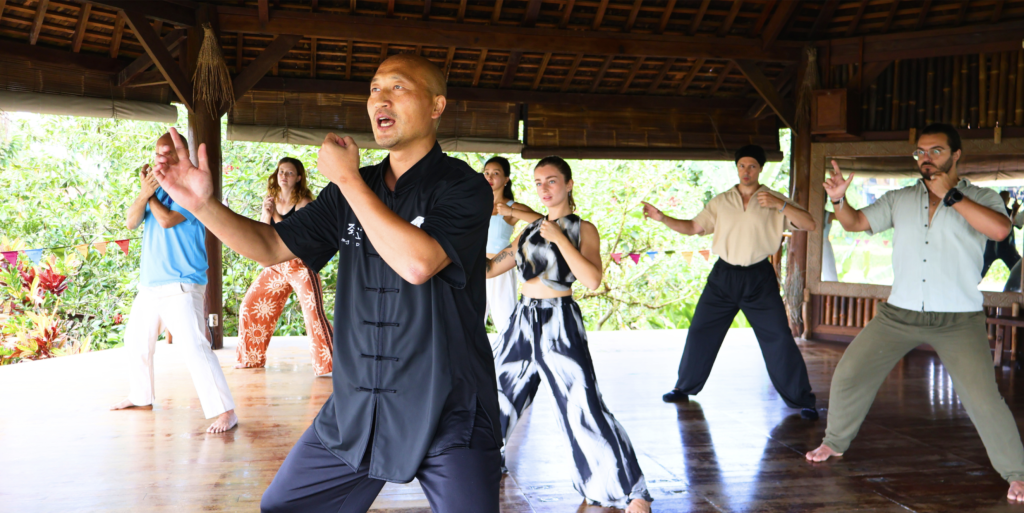
One reason many people join the retreat is to experience Tai Chi beyond surface-level choreography.
Rather than focusing only on memorizing a sequence, the training emphasizes structure, coordination, sensitivity, balance, and responsiveness throughout movement. Participants spend time understanding how posture, stepping, alignment, and internal awareness work together during practice.
The slower pace allows participants to notice habits they may normally ignore during faster movement. Tension, unstable posture, uneven stepping, and disconnected breathing patterns become easier to observe when movements are practiced with more control and attention.
For many beginners, this becomes one of the most eye-opening parts of Tai Chi training.
Experiencing Structured Daily Practice
Another reason people join the retreat is the opportunity to practice consistently in a focused environment.
Unlike occasional drop-in classes, the retreat format allows participants to train daily over several days while gradually building familiarity with the practice. Sessions include guided instruction, solo drills, stepping work, partner exercises, and integration practice throughout the week.
This structure helps participants spend more time refining foundational principles instead of rushing through movements quickly.
Many participants find that consistent daily practice creates a deeper understanding of the training compared to shorter isolated sessions.
Developing Coordination and Body Awareness
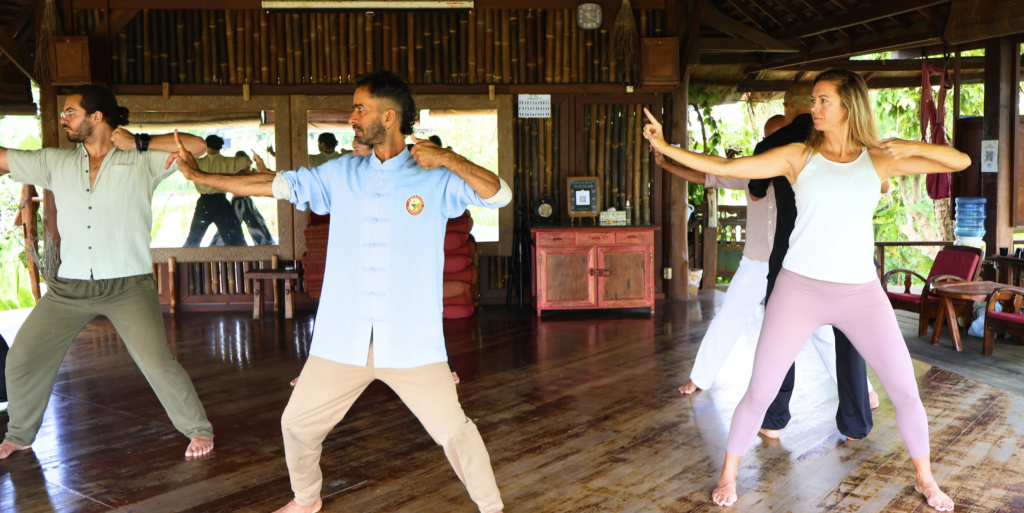
Tai Chi training requires continuous coordination between the upper and lower body while maintaining balance and controlled movement transitions.
Over time, participants often begin noticing improvements in:
- Balance and stability
- Coordination
- Posture awareness
- Controlled stepping
- Movement quality
- Breathing awareness
These changes are usually gradual rather than dramatic, but they often become more noticeable through consistent practice and repetition.
For many participants, Tai Chi becomes less about “performing movements” and more about understanding how the body moves as a connected system.
Training at Dragonfly Village in Ubud
One of the unique parts of the retreat experience is the environment itself.
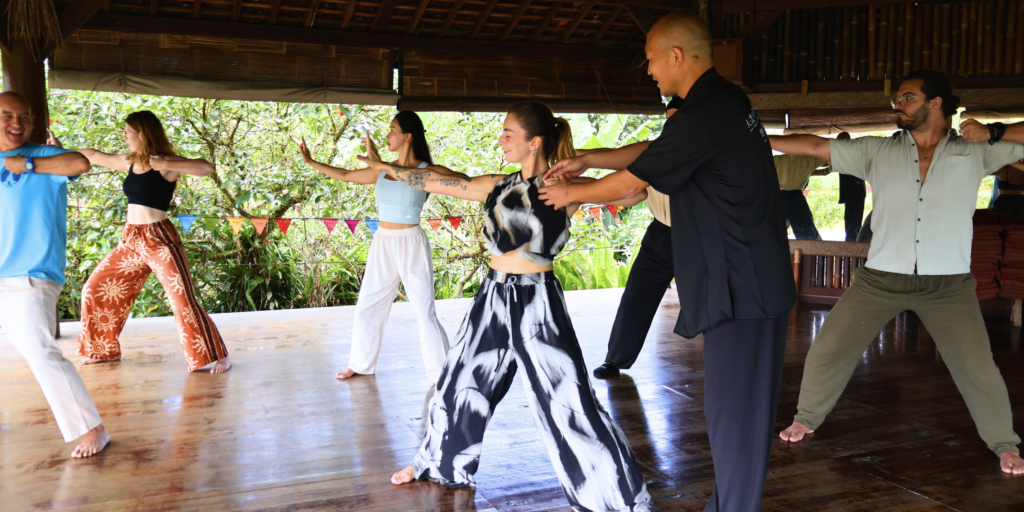
Tai Chi: 13 Forms of Harmony takes place at Dragonfly Village, a retreat space surrounded by rice fields and tropical greenery in Ubud. The setting allows participants to step away from crowded urban routines and spend several days practicing in a quieter and more focused atmosphere.
Training sessions are held inside open-air wooden shalas designed for movement and meditation practices. The slower pace of the environment often helps participants settle into the training more naturally, especially during longer daily sessions.
Dragonfly Village also provides shared spaces for rest, meals, recovery, and community interaction throughout the retreat. Between training sessions, participants have time to slow down, recover physically, and absorb the practice without rushing back into daily distractions.
For many people, the environment becomes an important part of the overall experience, not only because of the natural surroundings, but because it supports consistency, focus, and deeper immersion throughout the retreat.
Exploring Internal and External Practice Together
The Tai Chi: 13 Forms of Harmony intensive combines both external movement training and internal development throughout the week.
Participants explore structural alignment, stepping patterns, coordinated movement, sensitivity training, and internal awareness as interconnected parts of the practice rather than isolated techniques.
The training is designed to help participants understand how these principles function together as a complete system through repetition and guided practice.
For many people, this creates a much deeper appreciation for Tai Chi beyond its visual appearance.
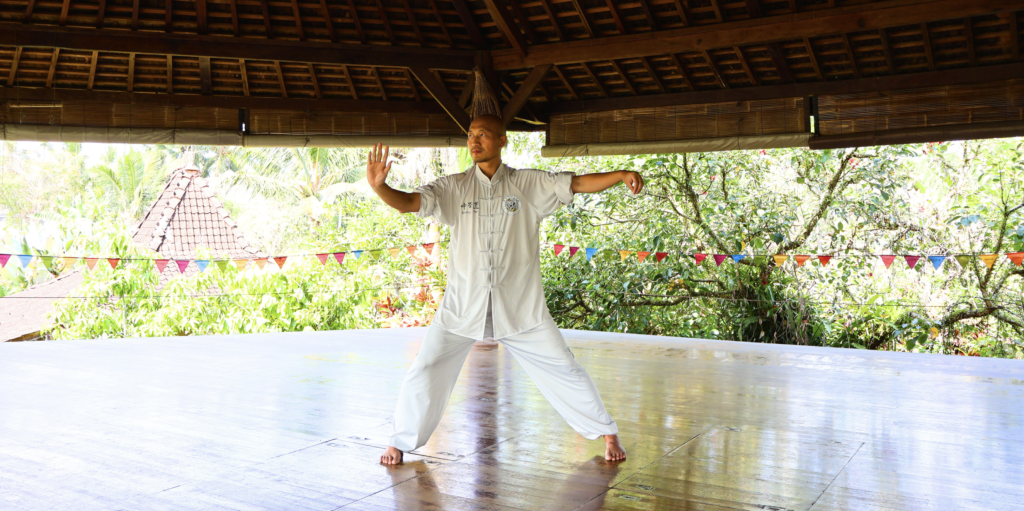
A Retreat Suitable for Different Experience Levels
The retreat welcomes beginners, intermediate practitioners, and more experienced participants.
Some people join with martial arts experience, while others arrive with backgrounds in yoga, Qigong, wellness practices, or no prior experience at all.
The focus is not on perfection or performance. Instead, participants are encouraged to learn progressively while developing consistency throughout the retreat.
This makes the program accessible for people who are genuinely curious about exploring Tai Chi more deeply without needing advanced technical experience beforehand.
Experiencing Tai Chi More Deeply in Ubud
For many participants, joining Tai Chi: 13 Forms of Harmony becomes an opportunity to step into a more immersive and focused training experience while learning directly through daily practice.
The retreat combines structured Tai Chi instruction, partner work, repetition, body awareness, and retreat atmosphere into a training environment designed for deeper exploration and consistency.
Join our Tai Chi:13 Forms of Harmony today, and don’t miss your chance to learn from Master Li Shi Feng.