
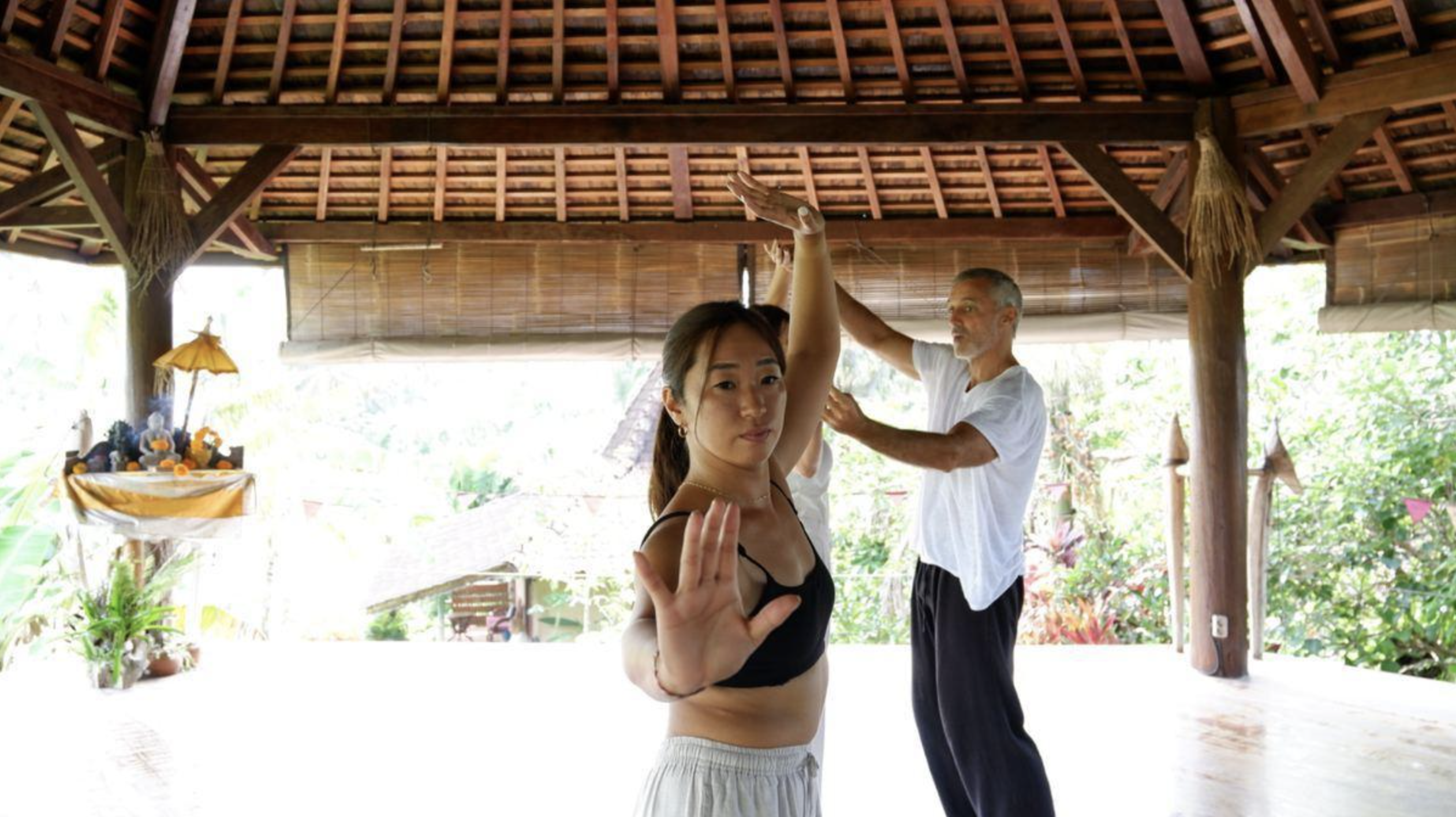
Qigong for Long COVID: Moving Slowly Back to Health
Many people with long COVID describe the same bind. Rest alone does not restore them, and the exercise they are told will rebuild their strength can flatten them for days. Qigong and tai chi sit in the space between those two options. They ask for movement, but at a pace set by the practitioner, with the breath leading and the effort kept well below the point where symptoms flare.
Neither practice is a cure, and the research does not support saying so. What it does support is a more modest and more useful claim: a daily, gentle, well paced practice is a reasonable thing to try, it carries little risk when done sensibly, and some of the evidence suggests real benefit.
What are qigong and tai chi?
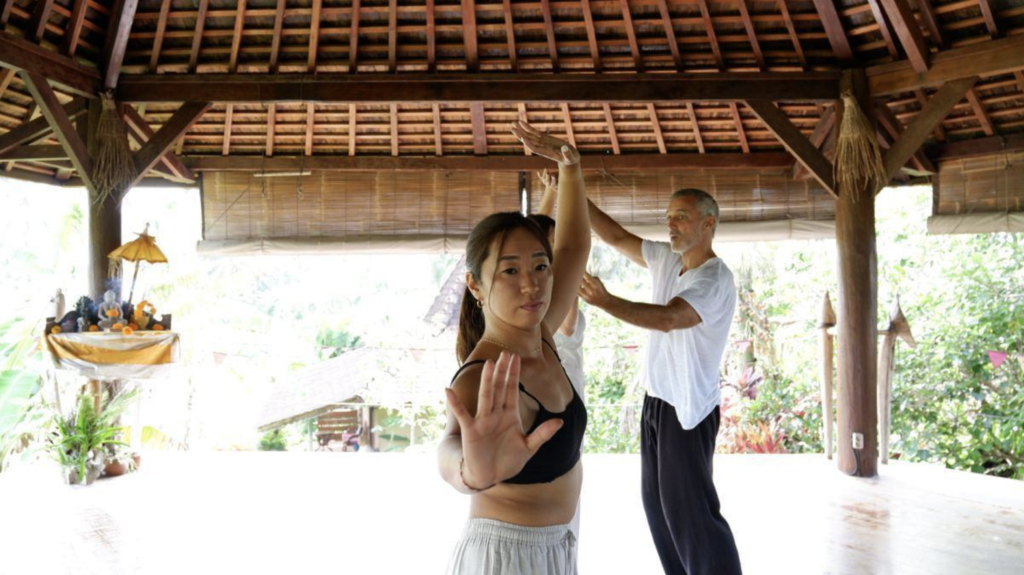
Qigong is a family of exercises that combine posture, slow movement, regulated breathing and focused attention. Tai chi grew out of Chinese martial arts and links its movements into continuous flowing sequences. Both are low impact, both can be done standing or seated, and both can be scaled down to a few minutes. That scalability matters for people whose energy is unpredictable.
Qigong or tai chi: what is the difference?
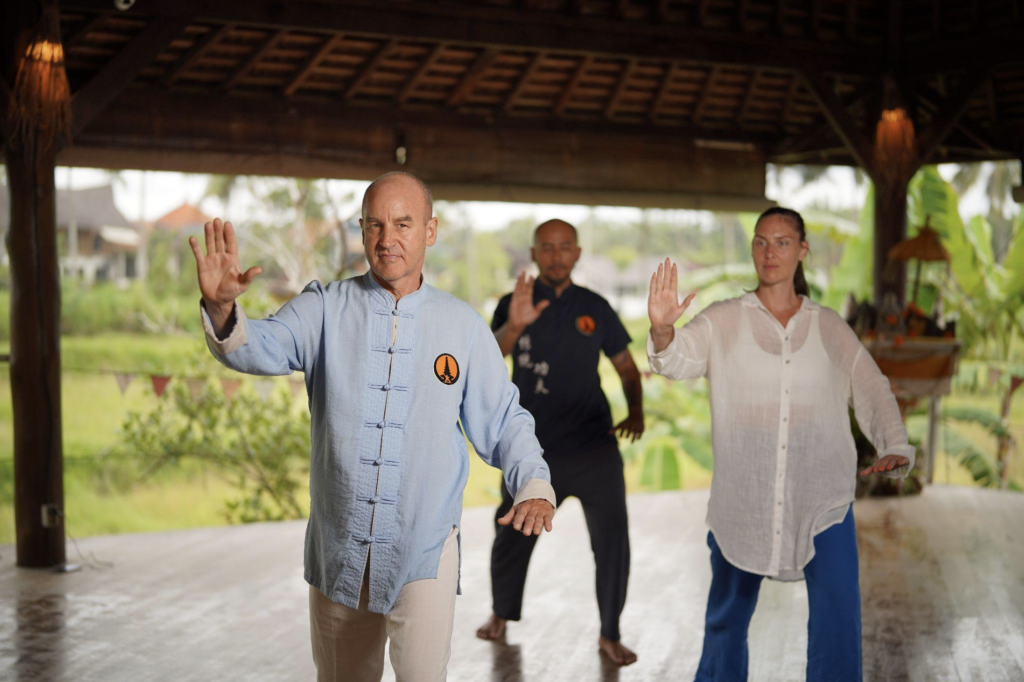
In simple terms, qigong is usually practiced standing in one place, using gentle arm movements and deep breathing. Tai chi moves around, linking postures into a flowing sequence. Qigong is sometimes called the Chinese cousin of yoga, except that it needs no mat and no held poses.
Tai chi is also a martial art. Its full name, Tai Ji Quan, refers to the fist and not to the word for energy, although there is no harm in linking it to qi in practice. The two overlap a great deal, and some styles of tai chi look almost the same as qigong.
What the research on qigong for long COVID shows
The honest summary is that the evidence base is small and mixed.
The most encouraging data come from Shanghai. Liu and colleagues followed 128 people who had been hospitalised with severe COVID and had taken part in an earlier trial of qigong and acupressure alongside standard care.
The follow up, published in Integrative Medicine Research in 2024, found that the programme had a sustained effect on breathlessness, chest tightness and cough, particularly in young and middle aged patients, and that the effect was significant at 14 months.
Follow up that long is unusual in this field, and it suggests the gains were not just a short lived response to attention and care.
A larger trial points the other way. The ACUQiG study, reported in Frontiers in Medicine, enrolled 235 people with post COVID fatigue and impaired physical function. The intervention group did daily acupressure at home for eight weeks plus twice weekly online qigong sessions, while the control group received no study intervention for the first 16 weeks.
Both groups improved over time, but adding acupressure and qigong to a self care leaflet produced no statistically significant or clinically relevant improvement in physical function compared with the leaflet alone.
That result deserves to be taken seriously, and it has more than one possible reading. The trial was open label, so participants knew which group they were in. The control group also received structured self care advice and improved considerably, which narrows the gap any added intervention can show.
The qigong was delivered online and was combined with acupressure, so the trial tested a package rather than qigong alone. It may also be that physical function is a harder target than breathing symptoms. None of these points rescues the intervention, but together they show how much remains unsettled.
There is also a single case report from Texas Tech University describing a woman with long haul COVID whose oxygen saturation rose from 83% to 93% over 10 weeks of tai chi and qigong practice. One patient proves nothing, though it is the kind of observation that prompts proper trials. One such trial is registered in Hong Kong.
It will compare acupuncture, a lifestyle programme including dantian breathing, qigong and acupressure, and the two combined against a wait list, in 100 COVID survivors with cognitive difficulties lasting at least 12 weeks. Brain fog is one of the most disabling long COVID symptoms, and results from that study will be worth watching.
Tai chi for fibromyalgia: lessons for long COVID
Because long COVID research is young, it helps to look at conditions with overlapping features and a longer trial history. Fibromyalgia is a useful comparison. It involves widespread pain, exhaustion, unrefreshing sleep and a tendency to crash after overexertion.
Wang and colleagues published a randomised trial in the BMJ in 2018 that compared tai chi with aerobic exercise, the standard non drug treatment.
It enrolled 226 adults, and when both were delivered at the same intensity and duration, 24 weeks twice weekly, tai chi produced a greater improvement, with a between group difference of 16.2 points on the Fibromyalgia Impact Questionnaire. Participants also attended tai chi sessions more often than they attended aerobic exercise.
That last finding matters as much as the headline result. The best programme on paper is useless if people cannot sustain it. One commentator noted that a hard aerobic session can leave a person with fibromyalgia drained the following day, which will sound familiar to anyone with long COVID.
The trial also found that longer practice gave greater benefit, and that twice weekly sessions did not add significantly over once weekly sessions. The practical message is that consistency over months counts for more than intensity in any one week.
An earlier randomised study by the same group had found clinically important improvements in symptoms and quality of life when tai chi was compared with wellness education and stretching.
Fibromyalgia is not long COVID, and results do not transfer automatically. Still, the combination of better adherence and better outcomes against a conventional exercise comparator is relevant to anyone designing a recovery routine around a body that punishes overreach.
Why qigong and tai chi might help
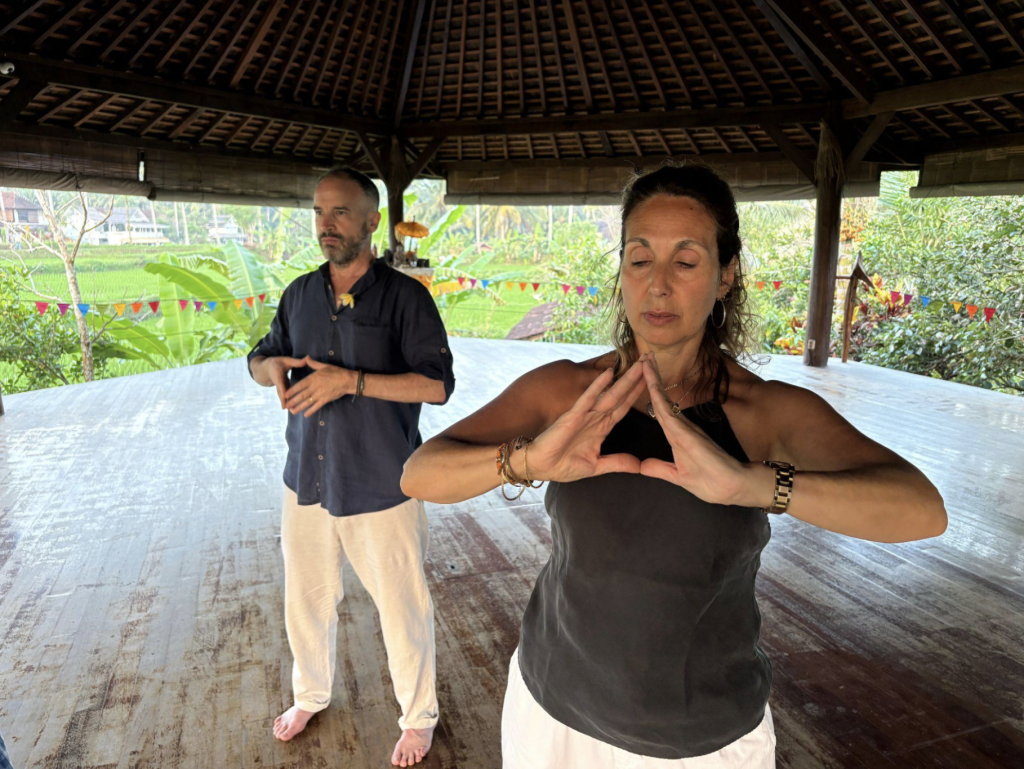
The mechanisms below are hypotheses. No long COVID trial has demonstrated them directly.
Slow breathing through the diaphragm shifts the nervous system toward its calmer, restorative state, and many people with long COVID show signs of autonomic disturbance such as a racing heart on standing. Movement at a low, steady heart rate lets the body practise activity without triggering the surge that precedes a crash.
Sustained attention to sensation can improve a person’s ability to notice early warning signs and stop in time, which is the core skill of energy management. Finally, a short daily ritual gives structure and a sense of agency to people who have often lost both.
A personal note: qigong, brain fog and long COVID
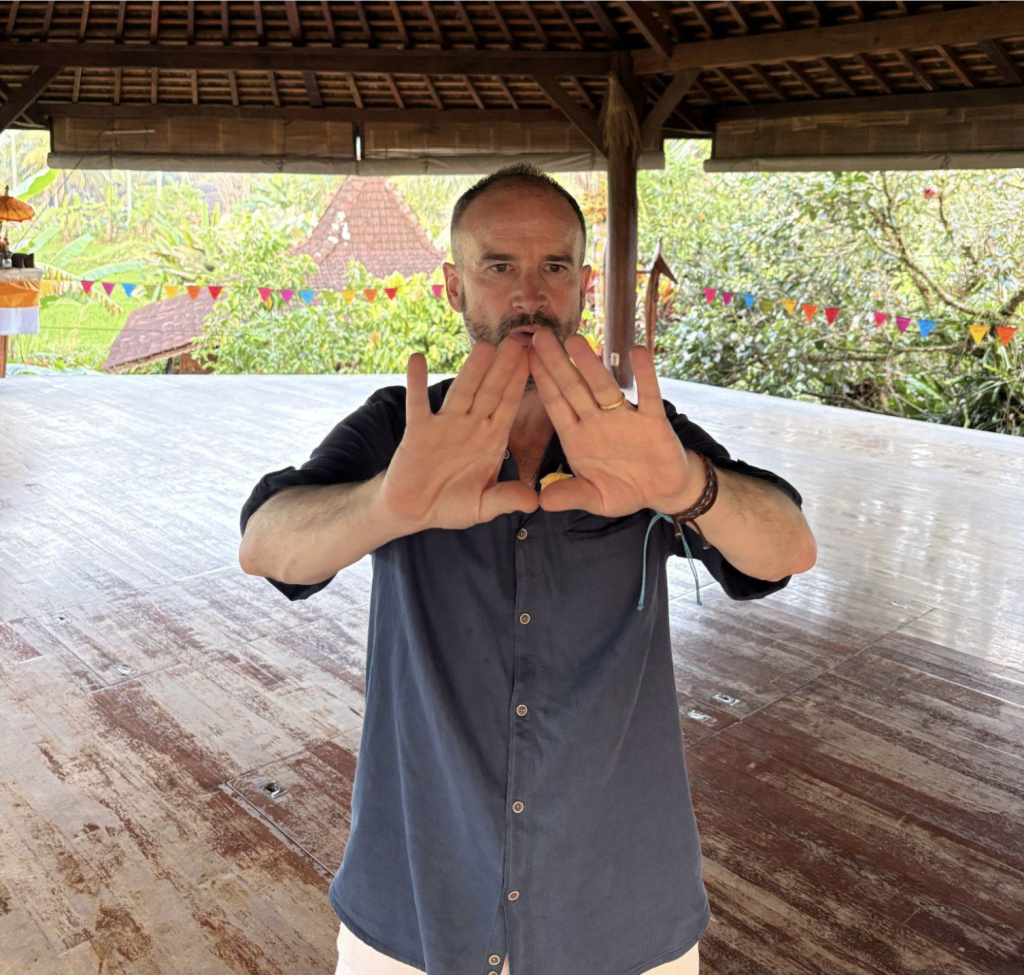
Long COVID forced me to change my life. I stopped vigorous exercise and struggled with brain fog, and I found that Qigong helped, mostly through the breathing and the relaxation. It all started with a five day workshop, five half days with a group of about twenty people. By day three I knew I was onto something.
Tai chi followed naturally, then a trip to China to learn more, and then Shaolin Kung Fu, which I now see as part of one continuous mind body practice. That is why every programme at Bali Flow includes Qigong. My story is one person’s experience and not evidence, which is exactly why I value the careful research above.
A note from the founder of Bali Flow Retreats
“This retreat taught me about pace, surrender, and meeting life as it comes.”
How to start qigong safely with long COVID
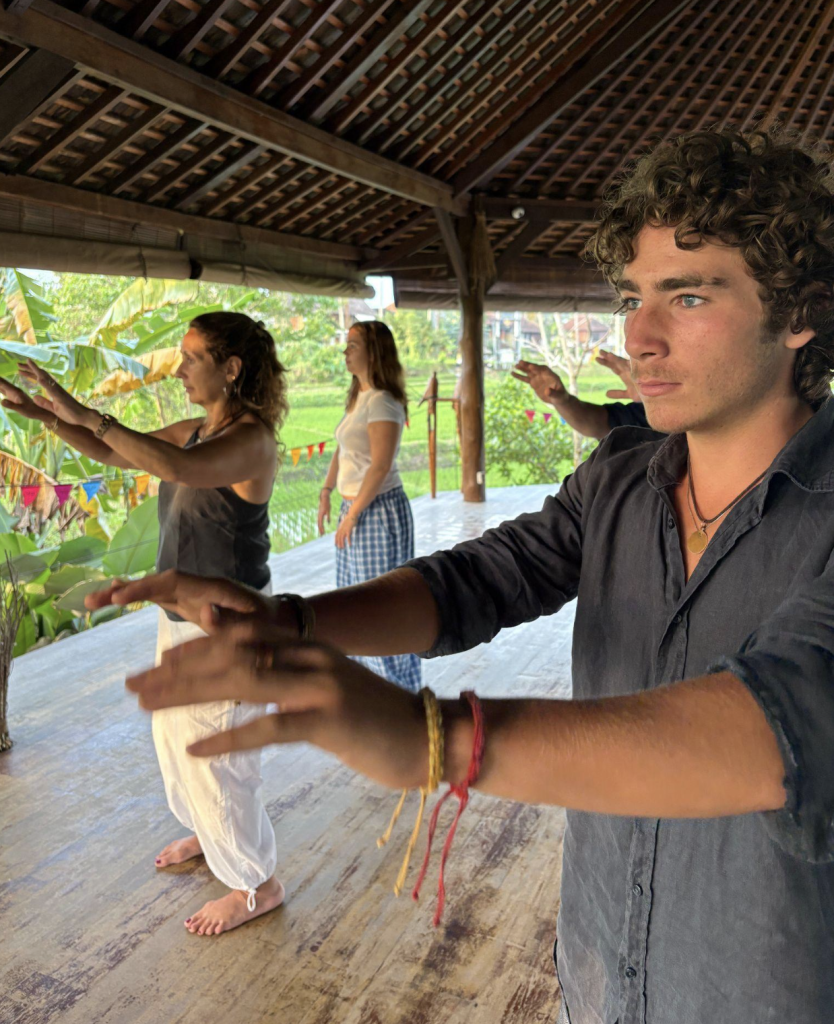
Post exertional symptom worsening, often called post exertional malaise, is the main hazard. It can arrive a day or two after the activity, so a session that feels fine in the moment may still have been too much. The remedy is to start smaller than seems necessary.
A sensible beginning is five to ten minutes a day. Start with seated or standing breathing and a few simple postures, and add flowing movement only when the baseline is stable. Keep the pace slow enough that conversation is easy. Stop before fatigue arrives, not after.
If symptoms worsen the next day, cut the session length by half and hold it there for a week or two before building again. Many people find that a short practice done every day serves them better than a longer one done when they feel good.
Anyone with chest pain, fainting, a significant drop in oxygen levels or a diagnosis such as postural orthostatic tachycardia syndrome should speak to their doctor before starting. These practices belong alongside medical care and not in place of it.
A reasonable conclusion
The evidence does not yet prove that qigong or tai chi speeds recovery from long COVID. One trial suggests lasting benefit for respiratory symptoms, a larger one found no advantage for physical function, and several more are under way.
What the research does show, in long COVID and in related conditions, is that these practices are well tolerated, that people keep doing them, and that slow, regular practice tends to help more than it harms.
For someone who has been caught between rest that does not restore and exercise that backfires, that is a good enough reason to begin, carefully and at a pace the body allows.
Frequently asked questions
Can qigong help with long COVID?
The evidence is small and mixed. One Shanghai follow up found a lasting effect on breathlessness, chest tightness and cough at 14 months, while a larger trial found no advantage for physical function. Neither practice is a cure.
Is tai chi safe for long COVID?
Done sensibly, it carries little risk. The main hazard is post exertional symptom worsening, which can arrive a day or two later, so start with five to ten minutes. Speak to your doctor first if you have chest pain, fainting or POTS.
How long should I practise each day?
Start with five to ten minutes and stop before fatigue arrives. If symptoms worsen the next day, halve the session for a week or two before building again. A short daily practice usually serves better than a long occasional one.
Can qigong help with long COVID brain fog?
There are no trial results yet. A registered Hong Kong trial will compare acupuncture, a lifestyle programme that includes qigong, and the two combined against a wait list, in 100 COVID survivors with cognitive difficulties lasting at least 12 weeks. Personal experience, including the note above, is encouraging but is not evidence.
What is the difference between qigong and tai chi?
Qigong is usually done standing in one place with simple movements and deep breathing. Tai chi links movements into a flowing sequence and is also a martial art. The two overlap, and both can be scaled down to a few minutes.
Learn qigong and tai chi in Ubud, Bali
Bali Flow Retreats teaches Qigong and Tai Chi in groups of up to twenty at Dragonfly Village, an eco retreat among the rice fields of Ubud, Bali. Every programme includes Qigong, and several are suitable for complete beginners. If you are living with long COVID, tell your teacher before you begin so the pace can be adjusted.
- Message us on WhatsApp: +62 813 3757 9464
- View the programmes and book: Bali Flow Retreats programmes
- Email: info@baliflow.org
- Follow on Instagram: https://www.instagram.com/baliflowretreats/
References
Liu S, Zhu R, Yao C, Zhan C, Wang J, Fang M, Fang L. Long term follow up of the treatment for severe COVID-19 with qigong exercise and acupressure: a randomized controlled trial. Integrative Medicine Research, December 2024. Registration ChiCTR2100044572.
ACUQiG study group. Acupressure and Qigong in post infectious fatigue with impaired physical function: a randomized clinical trial. Frontiers in Medicine, 2026. Registration NCT05289154. clinicaltrials.gov/study/NCT05289154
Wang C, et al. Effect of tai chi versus aerobic exercise for fibromyalgia: comparative effectiveness randomized controlled trial. BMJ 2018;360:k851. doi: 10.1136/bmj.k851. Registration NCT01420640. doi.org/10.1136/bmj.k851
Testing non pharmacological TCM based treatments for cognitive impairment in people with long COVID symptoms: a randomized controlled trial. Registration NCT06042777, ClinicalTrials.gov. clinicaltrials.gov/study/NCT06042777
The use of tai chi and qigong to mediate long haul COVID-19 symptoms: a case report. Poster, Texas Tech University Health Sciences Center.