
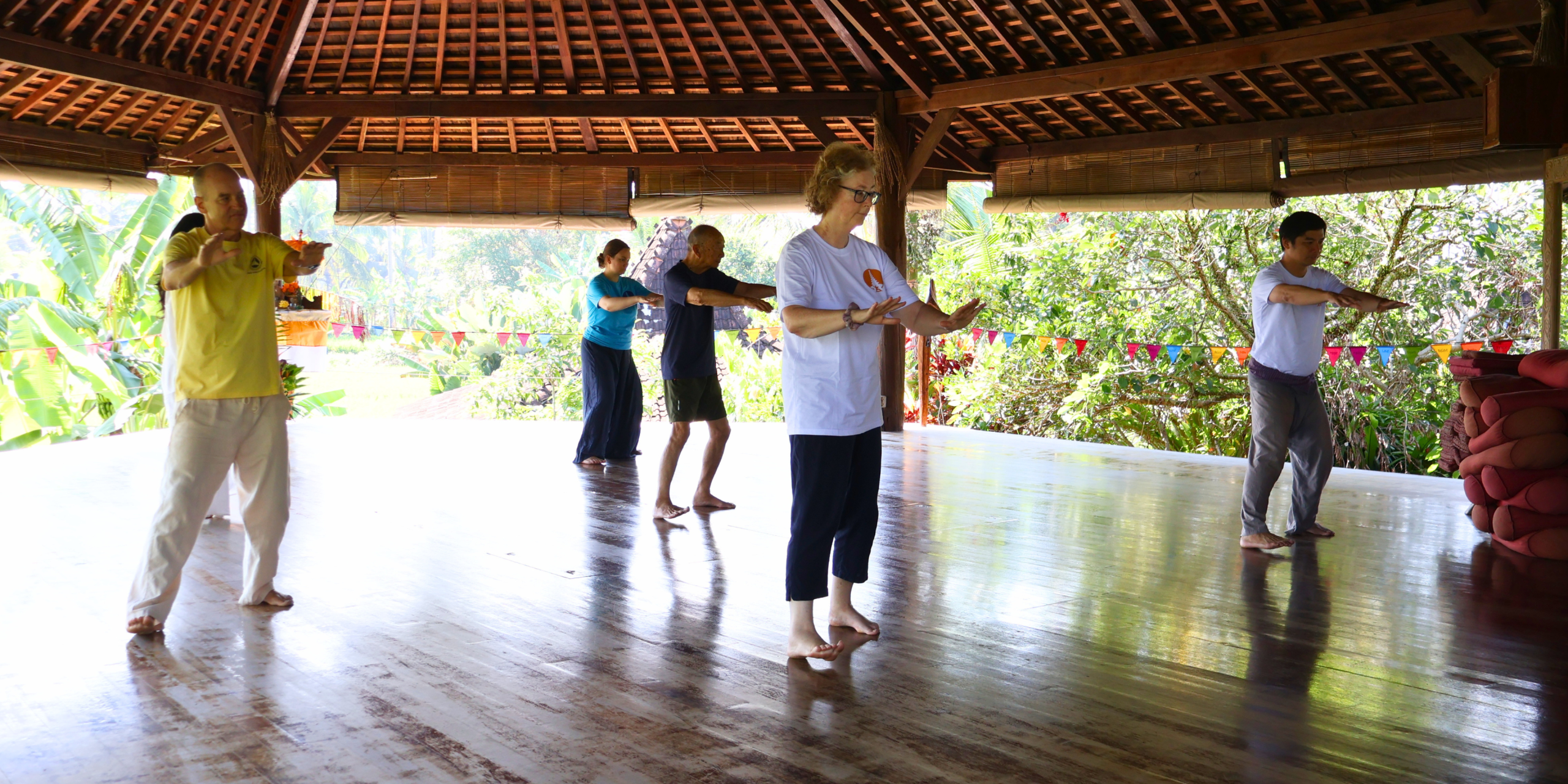
Tai Chi Immersive Retreat in Ubud: What Two Weeks of Practice Actually Changed
For two weeks in April, something very quiet—but very real—happened at Dragonfly Village.
No big promises.
No dramatic breakthroughs on day one.
Just a group of people showing up every day, moving slowly, learning how to pay attention again.
From 13–26 April 2026, the Tai Chi Immersive Retreat with Doctor of Chinese Medicine Jonwin Lee unfolded not as an escape, but as a return—to the body, to breath, to something steady that most people didn’t realize they had already lost.
A Different Kind of Learning
It didn’t start with intensity.
It started with slowing down.
The first few days were uncomfortable for some. Not physically—but mentally.
Because when movement slows down, everything else becomes louder: thoughts, tension, habits, impatience.
And that’s where the work actually began, not in mastering forms, but in noticing.
The Rhythm of Two Weeks
Each day followed a rhythm that, over time, stopped feeling like a schedule and started feeling like a reset.
Morning practice opened the body.
Afternoon sessions refined structure and coordination.
In between, there was space—real space—to rest, reflect, or just sit with the experience.
No rush, no pressure to “get it right”, and slowly, something shifted.
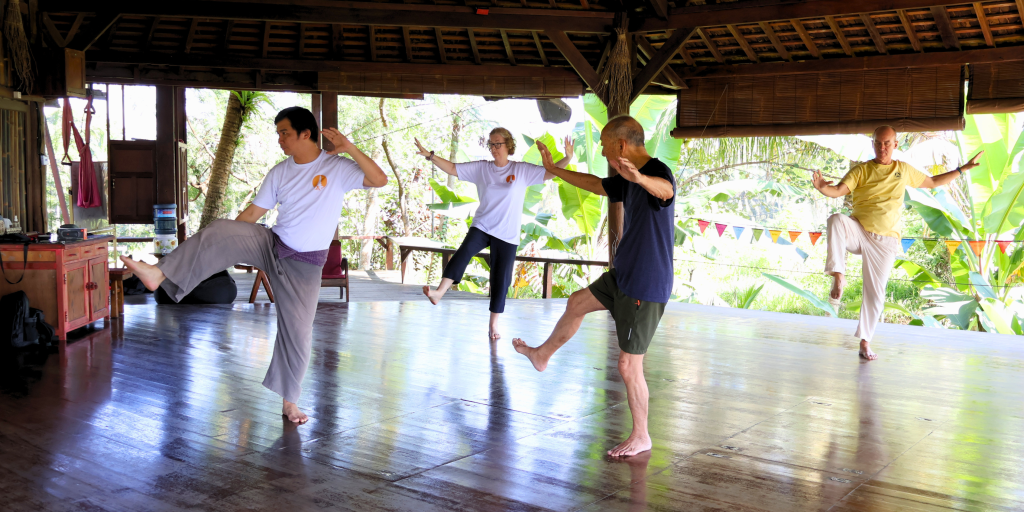
What the Practice Looked Like
From the outside, it might look simple: slow steps, controlled arms, quiet transitions.
But inside the body, it’s something else entirely.
Balance becomes awareness.
Breath becomes timing.
Stillness becomes strength.
And over days—not hours—that connection starts to hold.
When the Body Starts to Understand
Around the middle of the retreat, something subtle happened.
People stopped asking as many questions.
Not because they knew everything.
But because they started feeling it.
Movements became less forced.
Breath became less controlled.
The body began to organize itself without overthinking.
That’s when Tai Chi stops being something you do—and becomes something you inhabit.
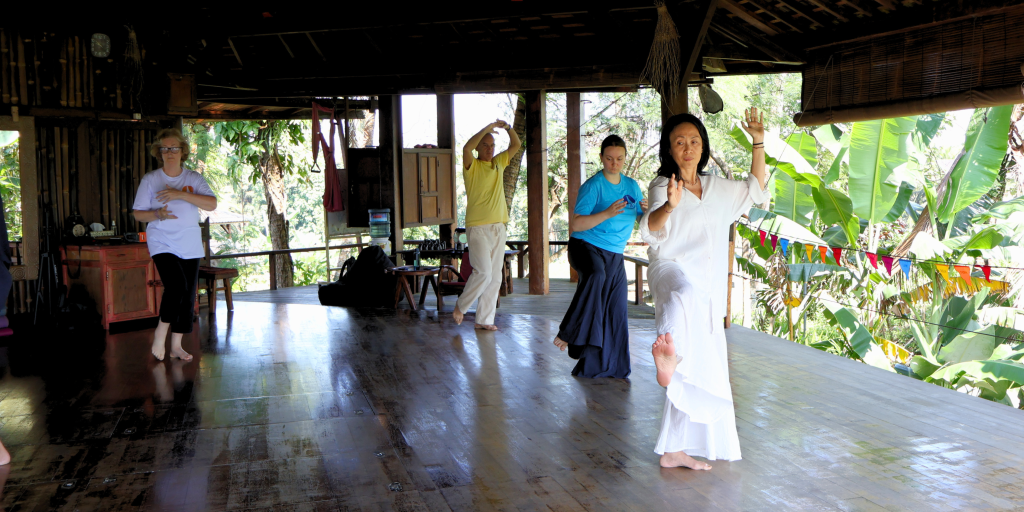
The Energy of Practicing Together
Practicing alone is one thing.
Practicing in a group—day after day—changes the experience completely.
You begin to move with others, not just next to them.
You notice rhythm, timing, presence—not just your own, but shared.
There’s something grounding about that.
Something that makes the practice stay longer.
The Quiet Changes
Not everyone experiences this in the same way.
For some, the shift is immediate and profound—something opens, patterns become clearer, and the practice touches deeper layers they didn’t expect. It can feel transformative, even within a short time.
For others, the changes are quieter. Movements become more efficient, tension softens without force, breathing settles, and reactions begin to slow down, even outside the shala.
Both are part of the same process. And somewhere along the way, regardless of how it shows up, people begin to trust that this is something they can continue on their own.
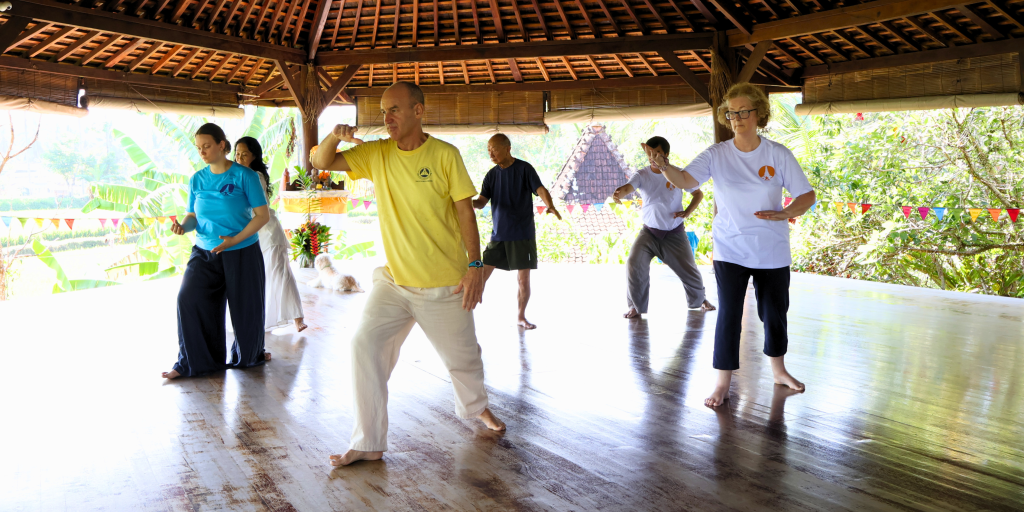
Carrying It Into Daily Life
This wasn’t designed to stay in the shala.
What was learned here is simple enough to carry:
- A few minutes of standing
- A short sequence of movement
- A moment of awareness in the middle of a busy day
Nothing complicated.
But done consistently, it changes how the body responds to life.
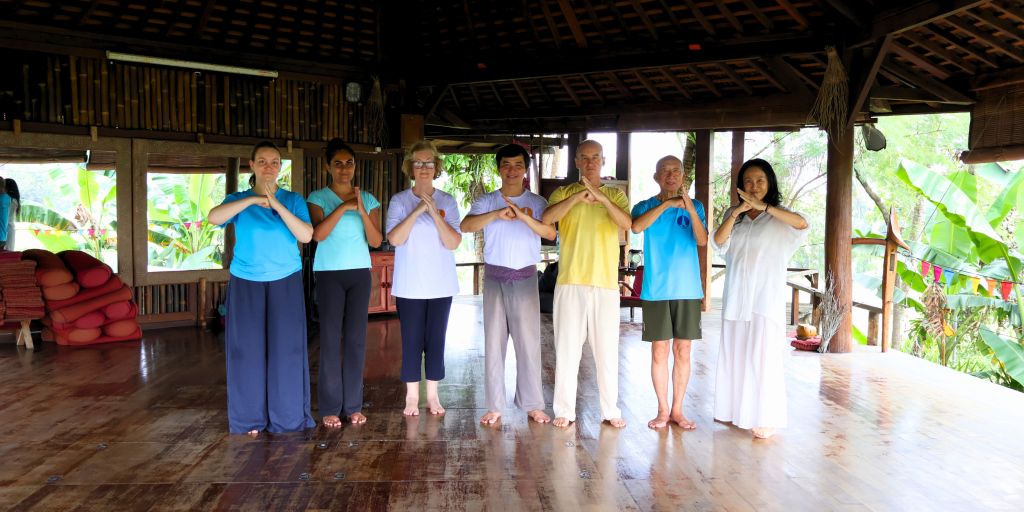
The Final Days
By the end of the two weeks, the energy shifted again. Less instruction, more presence.
People moved with more confidence—not because they perfected the form, but because they understood the feeling behind it. And that’s the part that stays.
What Remains After
There isn’t one single way these two weeks land. For some, the changes feel subtle—like the body moving with less resistance, or the mind settling a little faster than before. For others, the shift is much more immediate, even confronting at times, as patterns they’ve carried for years begin to surface and reorganize through the practice.
What makes it transformative isn’t a single breakthrough moment, but the consistency of returning—day after day—to the same movements, the same breath, the same attention. Over time, that repetition creates space for something deeper to shift, whether quietly or all at once.
And that’s what remains. Not just the memory of the retreat, but a process that has already started within them—something they can continue, in their own way, long after leaving the shala.